Cabbage Farmers Struggle as Increased Production Leads to Lower Prices and Income
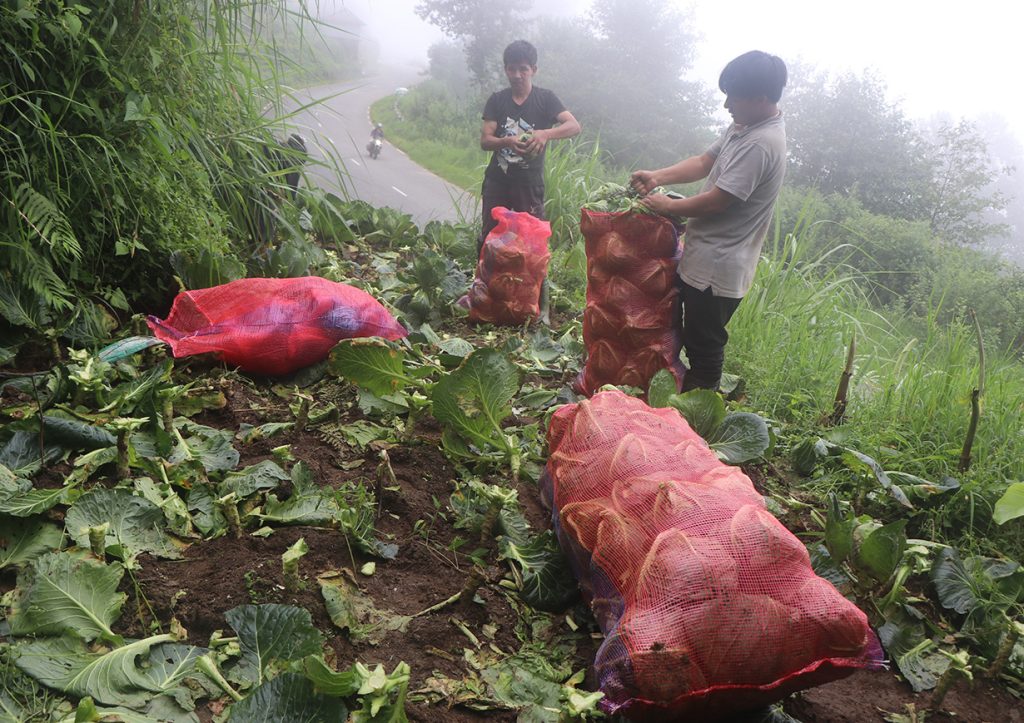
Cabbage cultivation serves as a primary income source for farmers in the western region of Tehrathum and the upper areas of Dhankuta district in Nepal. Many farmers in Chhaththar Rural Municipality and Laligurans Municipality of Tehrathum, as well as Chhaththar-Jorpati Rural Municipality and Mahalaxmi Municipality of Dhankuta, rely on cabbage as a cash crop. The favorable cool climate and fertile soil in these regions are conducive to growing cabbage. However, despite increased production, farmers are facing a significant challenge: they are not receiving adequate prices for their harvest. This disconnect between higher yields and falling market prices is directly impacting their overall income, creating a difficult economic situation for these agricultural communities. The situation highlights a market imbalance where increased supply is not translating into increased profitability for the producers. Farmers are caught in a cycle where investing more in production does not guarantee a better financial return.
This situation illustrates a common agricultural market dynamic where increased supply, driven by favorable growing conditions and potentially government or market incentives, can outpace demand or processing capacity. This leads to a price collapse, negatively impacting farmer profitability. The challenge lies in developing market mechanisms that ensure fair pricing for producers, possibly through better forecasting, diversified market access, or value-addition initiatives like processing or storage. Over the next decade, as climate change potentially alters growing seasons and AI-driven agricultural technology advances, ensuring resilient and profitable farming practices will be crucial. Systems need to be designed to buffer smallholder farmers from extreme price volatility, promoting sustainable livelihoods rather than just increased output.
AI-generated to prompt reflection — not editorial opinion, not advice, not a statement of fact. How this works.