Calm Returns to Ceuta and Fnideq After Mass Migration Event
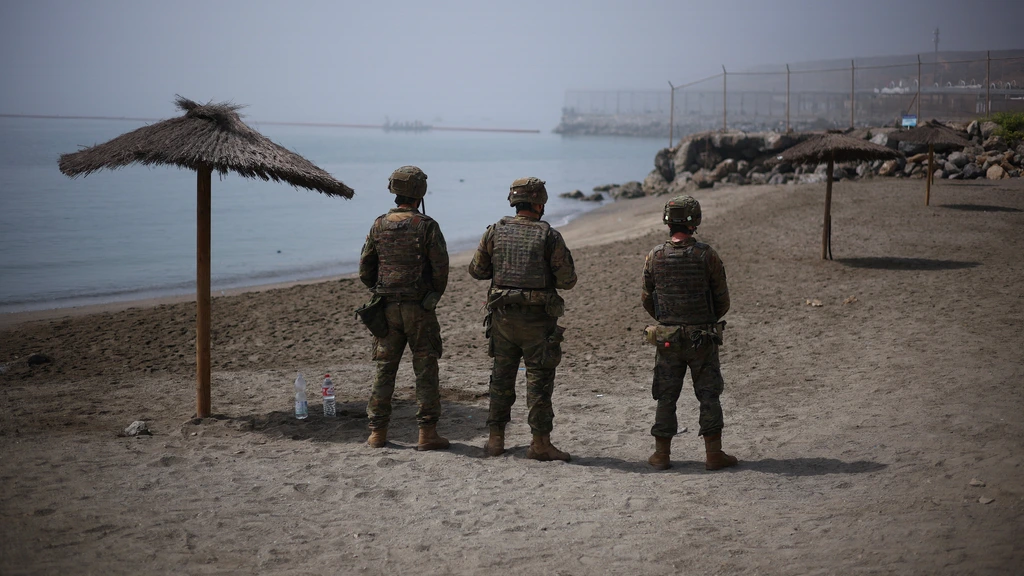
A sense of normalcy is gradually returning to Ceuta, a Spanish exclave on the North African coast, following a significant influx of migrants. Shops have begun reopening, though many residents remain bewildered by the events of the past few days. Ceuta's 84,000 inhabitants witnessed an unprecedented arrival of 50,000 to 60,000 Moroccans, predominantly young men, who crossed the sea seeking better prospects in Europe. Most have since been repatriated, frustrated by the lack of onward travel options, accommodation, food, and water. Exceptions were made for a small number of women and children. Those who remain are attempting to evade authorities but are expected to be escorted to the border. The traditional city festival, scheduled to begin on the day of the article's publication, has been canceled due to the recent crisis, a blow to local amusement operators. Spain has installed a floating border marker to facilitate the immediate return of intercepted migrants at sea, a measure intended to comply with a Spanish Supreme Court ruling that prohibits the return of migrants intercepted at sea without a clear physical border. In Fnideq, on the Moroccan side, the situation has also stabilized, with fewer youths attempting to cross. Businesses in Fnideq have reopened after being temporarily closed, likely to deter migrants. The border crossing between Fnideq and Ceuta is now open, easing travel for those returning to Spain. While the exact catalyst for this large-scale migration remains unclear, it is understood that many young Moroccans, facing bleak futures at home, embarked on the journey without extensive planning, possibly influenced by social media calls. Tragically, dozens lost their lives during the crossing, with Spanish authorities confirming 67 deaths.
The mass migration event at Ceuta highlights the complex interplay of geopolitical factors, economic disparities, and border control mechanisms. Spain's implementation of a floating border marker, while addressing a legal technicality, underscores the ongoing challenge of managing irregular migration flows and the tension between humanitarian concerns and national sovereignty. The incident also points to the potential for social media to act as a catalyst for large-scale, uncoordinated movements, raising questions about information dissemination and its impact on vulnerable populations. Future policy responses will likely need to balance immediate border management with addressing the root causes of migration in originating countries, considering the long-term implications of such events on regional stability and international relations.
AI-generated to prompt reflection — not editorial opinion, not advice, not a statement of fact. How this works.