Cameroon and EU Boost Local Governance Cooperation on Climate, Digitalization, and Funding
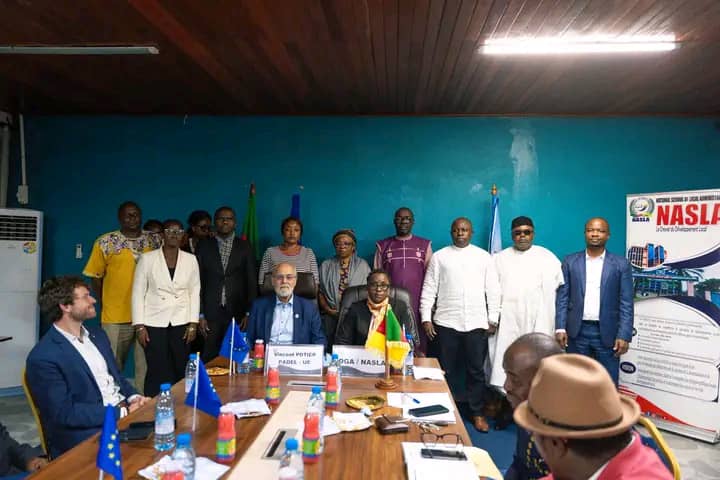
On July 7, 2026, Cameroon's National School of Local Administration (NASLA) and the European Union (EU) reinforced their commitment to decentralization. A working session with officials from the EU-funded Local Development Support Program (PADL) focused on three key priorities for decentralized territorial communities (CTDs). These priorities are adapting to climate change, embracing digital transformation, and securing adequate funding for decentralization efforts. Vincent Potier, team leader for PADL's technical assistance, met with NASLA's Deputy Director General to discuss challenges facing local authorities. The discussions aimed to identify strategies for improving local governance and enhancing the capacities of territorial administrations. The meeting highlighted the critical need for territories to adapt to increasing environmental risks due to climate change. Digital transformation was identified as crucial for modernizing public services and improving citizen service delivery. The issue of financing decentralization was deemed central to ensuring local communities possess the necessary resources to effectively exercise their responsibilities. This collaboration signifies a mutual desire between Cameroonian authorities and the EU to foster more effective territorial governance. The EU's support for PADL aids Cameroon's reforms in strengthening institutional capacities of local authorities and promoting balanced territorial development. For NASLA, this partnership is vital for equipping future local managers with skills relevant to evolving decentralization demands, particularly concerning climate challenges, digitalization, and public resource management. The ongoing cooperation underscores a shared commitment to building more resilient, innovative, and responsive local communities.
This collaboration between NASLA and the European Union addresses critical systemic challenges facing local governance in Cameroon. By focusing on climate adaptation, digital transformation, and financial sustainability, the initiative seeks to enhance the operational capacity and resilience of decentralized territorial communities. The partnership's emphasis on skills development for local administrators, particularly in response to evolving climate and digital imperatives, aligns with broader trends in public administration modernization. From a long-term perspective, strengthening local governance through such targeted support is essential for achieving more equitable territorial development and improving the effectiveness of public service delivery. The initiative's success will likely depend on the sustained implementation of capacity-building programs and the effective allocation of financial resources to address the identified priorities, creating a more robust framework for local self-governance in the coming decade.
AI-generated to prompt reflection — not editorial opinion, not advice, not a statement of fact. How this works.