Cameroon Army's Second-in-Command Retired Amidst Chief's Illness
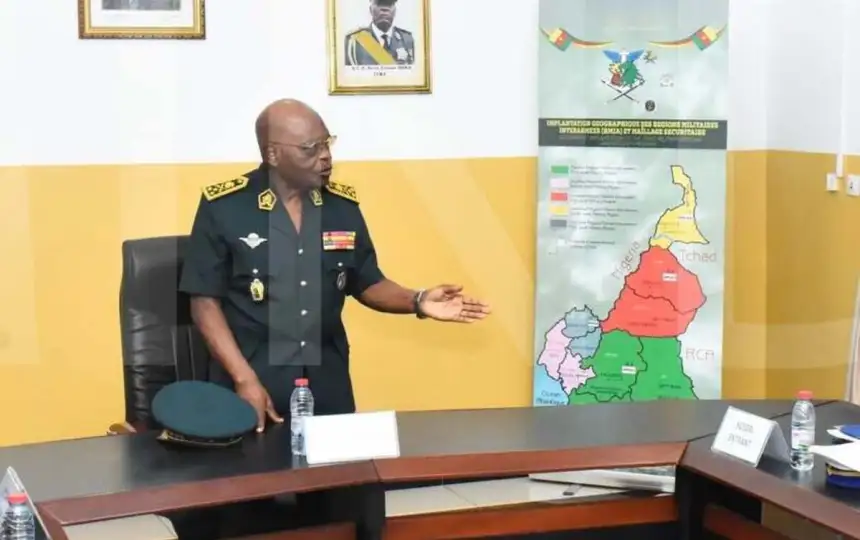
A presidential decree issued on July 28, 2026, has admitted Major General Hector Marie Tchemo, the second-in-command at the Army Staff, into the second section of military service. This decision has raised questions, particularly as the Chief of Army Staff has been reportedly ill and absent from recent Ministry of Defense ceremonies. General Tchemo, as the Major General, holds the crucial role of coordinating administration, supervising daily operations, and representing the Chief of Army Staff in his absence. He has effectively been leading the institution during the Chief's prolonged indisposition. The timing of his retirement is a point of contention, with some suggesting it aligns with statutory age and seniority rules. However, others express concern that his departure creates a leadership vacuum at a critical juncture, especially with ongoing security challenges such as Boko Haram in the north, armed groups in the NOSO region, and a tense sub-regional context. The abrupt nature of the decision sparks debate about whether it presents an opportunity for renewal or risks weakening the military's command structure. The immediate need is for a swift appointment of a credible successor to prevent a dual absence at the army's highest levels.
The retirement of Major General Tchemo while the Chief of Army Staff is incapacitated presents a potential governance challenge. From a structural perspective, the absence of both top leaders could create operational inefficiencies and uncertainty in decision-making, particularly given the noted security threats. The timing suggests a possible tension between administrative requirements and operational readiness. This situation highlights the importance of robust succession planning and clear interim leadership protocols within military structures to ensure continuity and stability, especially during periods of external security pressure and internal leadership transitions. The long-term implications will depend on the swiftness and suitability of the appointed successor.
AI-generated to prompt reflection — not editorial opinion, not advice, not a statement of fact. How this works.