Cameroon: Five Officers Promoted to Brigadier General, Ministerial Appointments Made
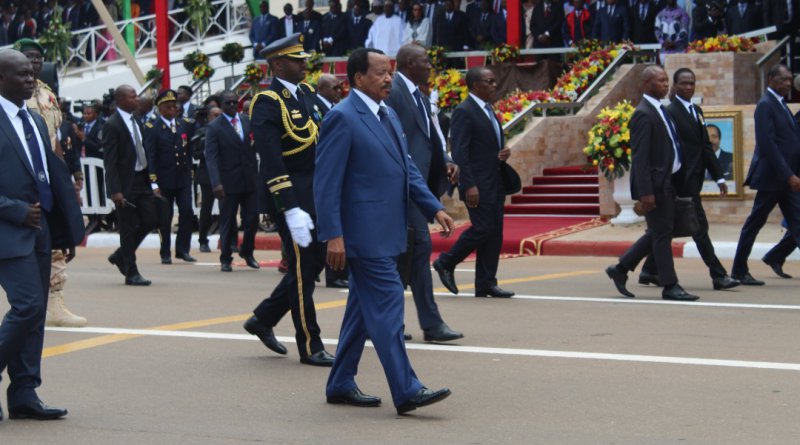
On August 3, 2026, Cameroonian President Paul Biya issued three decrees, including one that promoted five officers to the rank of Brigadier General. Of the five newly promoted generals, one is from the National Gendarmerie and four are from the Army. The promoted officers from the Gendarmerie include Eloundou Mesmin Magloire Aristide. Those from the Army are Beko’o Abondo Raymond Jean Charles, Nchankou Mbouombouo Njindam Oumar, Epié Ngome Wilson, and Mezui Zo’o Elie Romance. Additionally, two other decrees appointed several high-ranking officers within the Ministry of Defense and territorial military commands. General of Brigade Agha Robinson Ndong was appointed logistics advisor, and General of Brigade Eloundou Mesmin Magloire Aristide was named central director of administration and logistics. General of Division Ebaka Hippolyte became the major general of the joint army staff, while General of Division Nka Valère was appointed commander of joint schools and training centers. General of Brigade Assoualai Blama took command of the International War College. General of Brigade Épié Ngome Wilson was appointed inspector of forces, and General of Brigade Mezui Zo'o Elie Romance is now commander of the Rapid Intervention Brigade. In territorial commands, General of Brigade Melingui Nouma Donatien was appointed commander of the first joint military region, and General of Brigade Nchankou Mbouombouo Njindam Oumar leads the 11th Motorized Infantry Brigade. Colonel Ekoman Ekoman Yves Edgard is now commander of the General Staff Brigade, and Colonel Aziz Njoya Yacouba commands the 21st Motorized Infantry Brigade in the second military region. Rear Admiral ADE Nkwenti Hilary commands the third military region, and General of Brigade Nouma Joseph is appointed commander of the fourth military region. The third decree appointed General of Brigade Beko’o Abondo Raymond Jean Charles as commander of the Presidential Guard.
This series of promotions and appointments within Cameroon's military and Ministry of Defense, enacted by President Paul Biya, reflects a standard process of personnel management and strategic positioning within state security apparatuses. The reshuffling and elevation of officers are typical mechanisms for ensuring loyalty, rewarding service, and aligning military leadership with national defense objectives. In the context of evolving geopolitical landscapes and potential internal security challenges, such moves can be interpreted as efforts to reinforce command structures and maintain operational readiness. The specific roles assigned, such as logistics, central administration, and territorial commands, indicate a focus on both the functional efficiency and the territorial integrity of the nation. These actions underscore the enduring importance of hierarchical military structures in national governance and security policy implementation, particularly in regions facing complex developmental and security dynamics.
AI-generated to prompt reflection — not editorial opinion, not advice, not a statement of fact. How this works.
