Cameroon's Economy Ministry Adopts Internal Audit Guide for Public Fund Protection
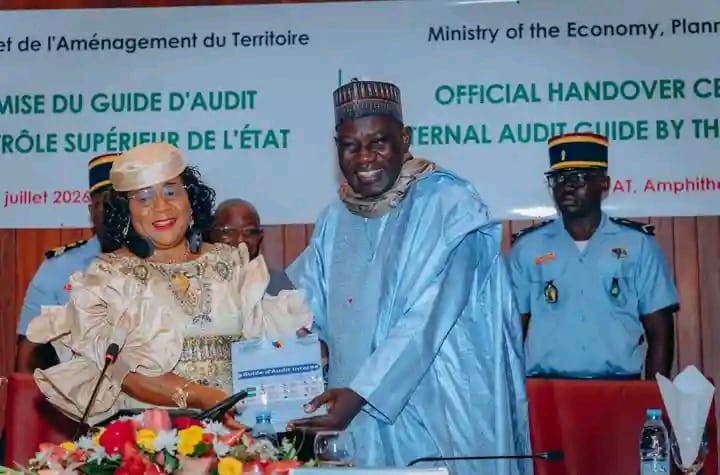
On July 21, 2026, the Ministry of Economy, Planning, and Territorial Development (MINEPAT) in Yaoundé officially received a new Internal Audit Guide. This guide, developed by experts from the Supreme State Audit (CONSUPE), is designed to enhance internal control mechanisms and foster more stringent management of public resources. The official handover ceremony took place in MINEPAT's Amphitheater 300 and was co-chaired by the Minister of Economy, Alamine Ousmane Mey, and the Minister Delegate to the Presidency in charge of CONSUPE, Rose Mbah Acha Fomundam. The guide serves as a reference document to direct the missions of MINEPAT's General Inspection. Its primary objectives include harmonizing audit practices, refining control procedures, and strengthening the prevention of misappropriation of public funds. Minister Mbah Acha Fomundam emphasized the necessity of standardizing work methods to align national audit practices with international standards. Minister Mey advocated for the widespread distribution of the guide, envisioning it as an essential tool for public administrations to promote transparency, good governance, and public sector efficiency.
The introduction of an Internal Audit Guide by Cameroon's MINEPAT, in collaboration with CONSUPE, signifies a formal commitment to strengthening fiscal accountability and governance. This initiative aims to align national auditing practices with international standards, potentially improving the efficiency and transparency of public resource management. The emphasis on a standardized 'vade-mecum' suggests a systemic effort to reduce variability in internal controls, which could mitigate risks associated with mismanagement or corruption. Looking ahead, the effectiveness of this guide will depend on its consistent implementation, the capacity building of audit personnel, and the responsiveness of public institutions to audit findings. Such measures are crucial in building public trust and ensuring that public funds are utilized optimally for national development objectives in an era increasingly focused on institutional integrity and performance metrics.
AI-generated to prompt reflection — not editorial opinion, not advice, not a statement of fact. How this works.