Cameroon's Ruling Party Blames 'Spiritual Enemies' Amidst Election Concerns
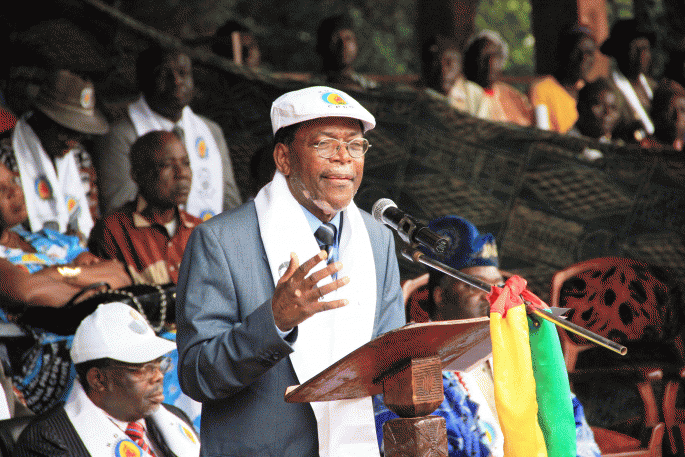
As legislative and municipal elections approach, Jean Nkueté, the Secretary General of Cameroon's ruling party (RDPC), has resorted to conspiratorial rhetoric, citing "triangular collusion" and "spiritual enemies." This approach, according to critics, avoids addressing the reality of public dissatisfaction, the weariness of prolonged rule, and the failures of the current system. Instead of presenting a political assessment, Nkueté invoked mysticism on July 15, 2026, in Yaoundé, claiming that "negative forces" supported by "local, external, and spiritual enemies" are hindering Cameroon's progress. This tactic is seen as an attempt to explain away issues like youth unemployment, poor infrastructure, and the high cost of living, rather than acknowledging the public's desire for change after 43 years of RDPC governance. The "triangular collusion" is interpreted as representing ordinary Cameroonians seeking change, critical external observers, and the "spiritual" element intended to instill fear and silence dissent. Critics argue that framing popular discontent as a diabolical plot disrespects voters' intelligence and denies democratic debate. The Secretary General's discourse offers no solutions or self-criticism, instead promoting fear and division. The article contends that Cameroon's true obstacles are internal issues like corruption, stagnation, and disregard for citizens, not external or spiritual adversaries. It suggests Nkueté should focus on a genuine party assessment rather than invoking unseen enemies, as neglecting the populace in favor of phantom threats is a significant oversight.
The RDPC's invocation of "spiritual enemies" and "triangular collusion" represents a strategic communication tactic to deflect from internal governance challenges and public discontent ahead of elections. By framing political opposition and societal grievances as mystical or external plots, the party sidesteps accountability for systemic issues such as corruption, economic hardship, and infrastructure deficits. This narrative aims to consolidate its base through appeals to fear and a sense of external threat, while simultaneously delegitimizing dissent as the work of malevolent forces. Such a strategy, however, risks alienating a populace seeking tangible solutions and may be perceived as an admission of political bankruptcy, particularly in an era where information flows more freely and citizens are increasingly demanding transparency and effective governance. The long-term sustainability of a political discourse reliant on intangible adversaries, rather than addressing concrete policy failures and public needs, remains questionable.
AI-generated to prompt reflection — not editorial opinion, not advice, not a statement of fact. How this works.