Cameroon Senate Debates 2027-2029 Budget, Outlining Public Action Priorities
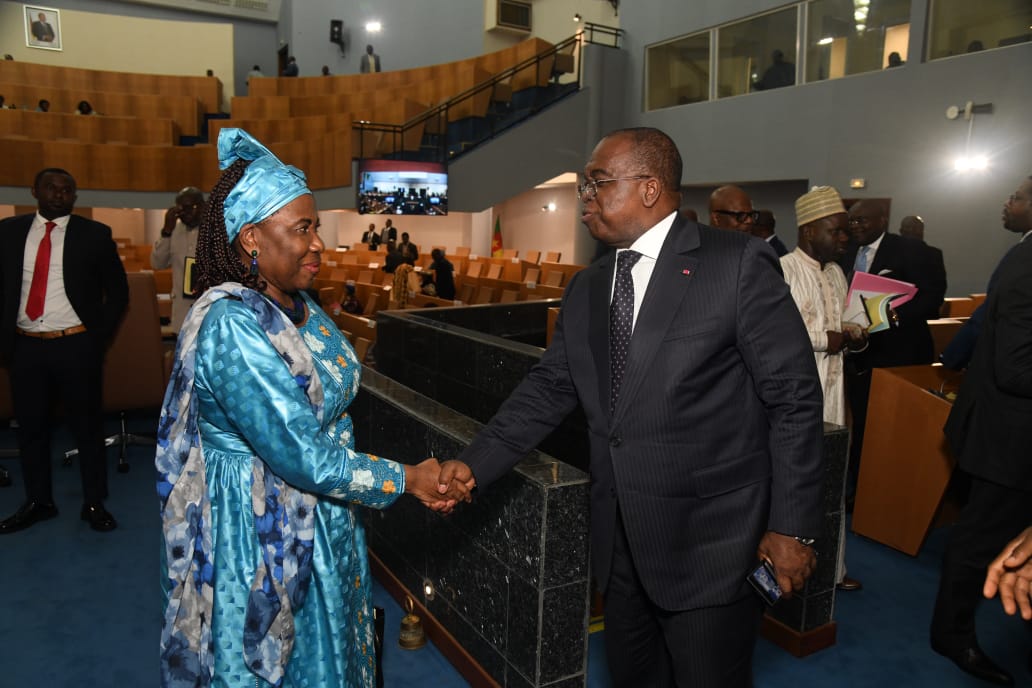
On July 7, 2026, the Cameroonian Senate convened in Yaoundé for the 2027-2029 Budget Orientation Debate, a crucial step in preparing future finance laws. Presided over by First Vice-President of the Senate Mikel Naomie Begala, the session featured a presentation by Mama Benjamin, the General Rapporteur of the Finance and Budget Commission, who outlined the government's key economic strategies for the next three years. Discussions focused on priorities for public action, including strengthening social protection, developing infrastructure particularly in the energy sector, consolidating decentralization, and empowering youth and women. A key objective is to increase public investment to 5.3% of GDP, alongside continuing the Reconstruction Program for the North-West and South-West regions. The debate also addressed administrative modernization through digitalization of parliamentary procedures, reforming public enterprise governance, and improving urban sanitation, waste management, and access to drinking water. Senators advocated for increased resources for social affairs, local peace consolidation, and tourism development. In response to concerns, Finance Minister Louis Paul Motaze reiterated the executive's commitment to fighting corruption, accelerating industrialization via SONARA restructuring, and leveraging the mining sector for growth. Minister Delegate to the Minister of the Economy, Paul Tasong, provided updates on energy and health projects, reaffirming the government's dedication to sustainable development and enhanced public services.
The Senate's budget orientation debate for 2027-2029 highlights a strategic focus on balancing economic growth with social development and infrastructure investment. The emphasis on increasing public investment to 5.3% of GDP and continuing regional reconstruction signals a commitment to tangible development outcomes. However, the success of these ambitious plans will hinge on effective governance, particularly in combating corruption and reforming public enterprises as stated by the Finance Minister. The digital transformation of parliamentary procedures and administrative processes suggests an awareness of evolving operational efficiencies, a trend likely to accelerate across public sectors globally. The integration of social protection, youth and women empowerment, and environmental concerns like sanitation and water access indicates a move towards more inclusive and sustainable public policy frameworks, aligning with broader global development goals for the coming decade.
AI-generated to prompt reflection — not editorial opinion, not advice, not a statement of fact. How this works.