Campina Grande inaugurates themed library with over 100 books by Black female authors
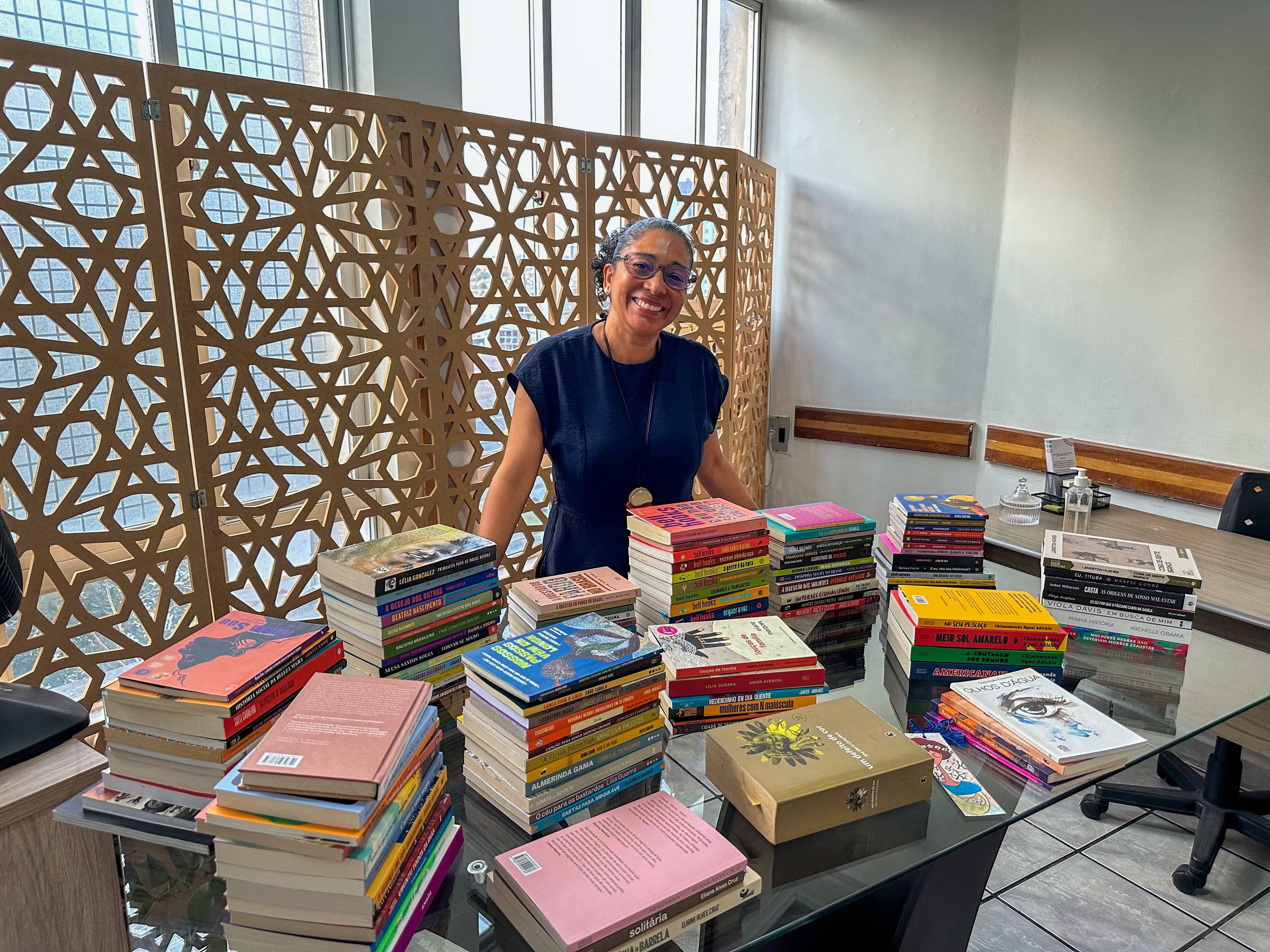
Campina Grande, in the Agreste region of Paraíba, Brazil, has a new themed library following the donation of more than 100 books by Black female authors. The library, named TEIA (Territory of Writings, Identities, and Ancestries), was inaugurated on Thursday, July 23rd, as part of the "Julho das Pretas" (Black Women's July) initiative. It features works by prominent authors who contribute to discussions on race and gender, including Conceição Evaristo and Djamila Ribeiro. The collection was established through a donation by Paraíba-based professor and journalist Carla Borba, who marked 30 years since completing her Journalism degree at the Universidade Estadual da Paraíba (UEPB) by sharing part of her personal collection. The books were given to the Rede de Conexões para Cidadania (ARCCID) association and are organized into theoretical works and critical thinking pieces. The titles are further categorized by national and international authors, offering readers diverse perspectives. National authors represented include Ana Maria Gonçalves, Eliana Alves Cruz, and Carolina Maria de Jesus, while international selections feature Maya Angelou, Chimamanda Ngozi Adichie, and Toni Morrison. Borba emphasized the importance of circulating these works to foster new connections among readers and encourage dialogue on race, gender, education, and culture. The library will be open to the general public starting the first week of August, located at Rua Grisbert de Oliveira Gonzaga, in the Velame neighborhood, operating from 2 PM to 6 PM.
The establishment of this specialized library in Campina Grande, coinciding with "Julho das Pretas," highlights a growing effort to increase the visibility and accessibility of Black female authors' contributions to intellectual discourse. By curating and donating a significant collection, Carla Borba has created a tangible resource that addresses a historical underrepresentation in literature and academia. The library's dual categorization—theoretical works and critical thought, alongside national and international authors—promotes a comprehensive understanding of diverse perspectives on race, gender, and culture. This initiative could serve as a model for other communities seeking to diversify their cultural institutions and foster more inclusive dialogues, potentially influencing educational curricula and public awareness campaigns over the next decade.
AI-generated to prompt reflection — not editorial opinion, not advice, not a statement of fact. How this works.