Campina Grande's São João Festival Recycles Nearly 80 Tons of Waste
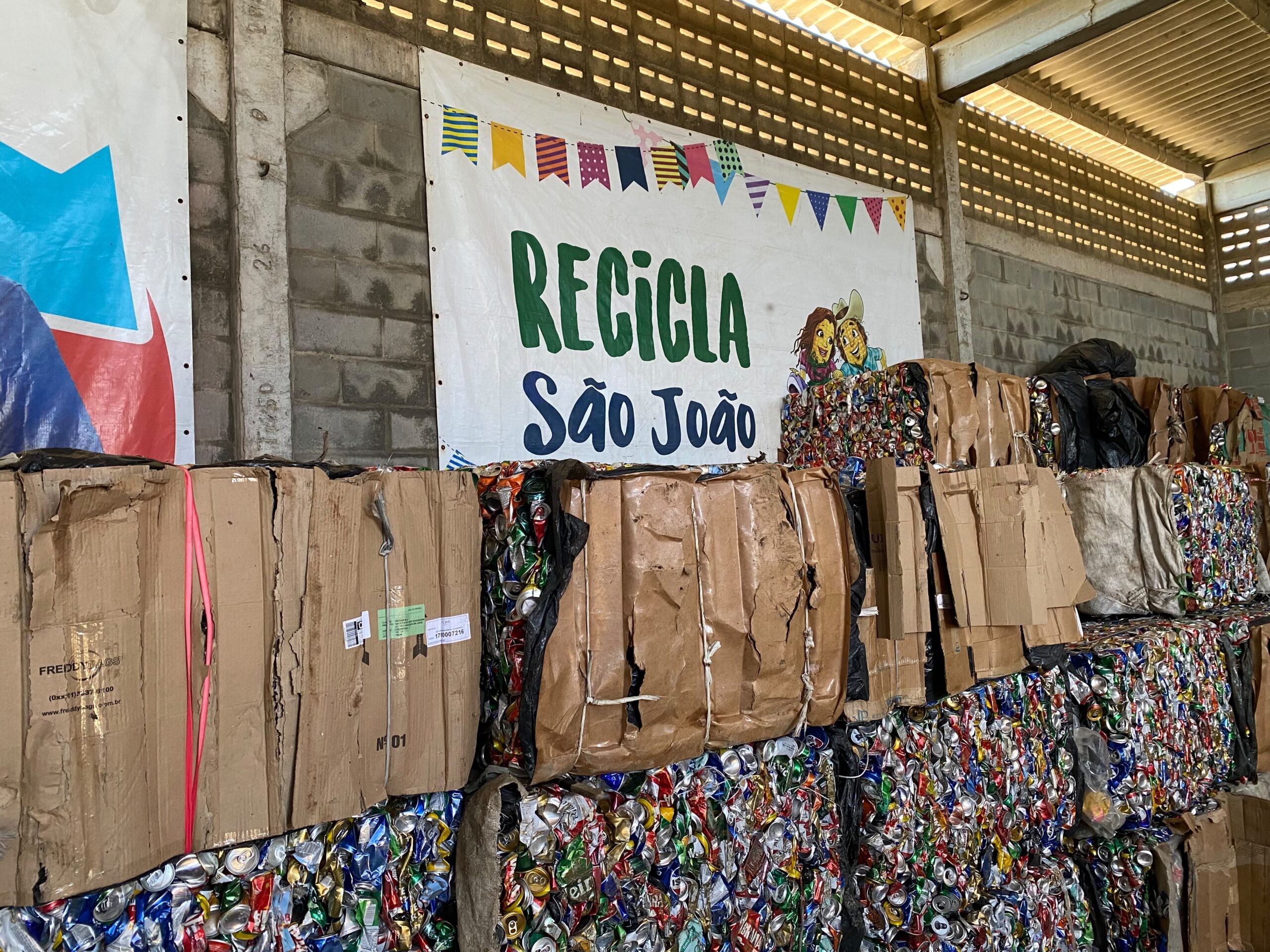
The 'Recicla São João' project successfully recycled nearly 80 tons of waste during the 2026 São João festival in Campina Grande, Paraíba. The festival, which lasted 33 days and concluded on Sunday, June 5th, also saw a record number of attendees, with 3.4 million people participating. This initiative is part of the year-round 'Recicla Campina' program, managed by the Municipal Secretariat of Urban Services and Environment (Sesuma) since 2016. Its goal is to ensure the proper disposal and recycling of materials such as aluminum, plastic, and cardboard, integrating with the city's urban cleaning operations. The recycling efforts expanded beyond the main festival grounds at Parque do Povo to include Parque Evaldo Cruz and the districts of Galante, São José da Mata, and Catolé de Boa Vista. Rafaela de Oliveira, an engineer and program coordinator, highlighted that the collection occurs in real-time during events and involves separating waste for return to the production cycle. This year's project team comprised 70 individuals, including collectors, supervisors, environmental educators, and support staff. The collected materials are processed at a dedicated facility, where they are sorted, baled, and sent to transformation industries for recycling, thus contributing to the circular economy. In comparison, the 2019 festival, the last before the COVID-19 pandemic, yielded just over 30 tons of recyclables. The 78.5 tons collected this year significantly surpass previous achievements, bringing the total recycled material over the project's nine-year history to 450 tons.
The 'Recicla São João' initiative demonstrates a growing capacity for waste management during large-scale public events, achieving a notable increase in recycled tonnage compared to pre-pandemic levels. This success highlights the potential for integrating environmental sustainability into cultural festivals, driven by dedicated municipal programs and increased public participation. The project's expansion across multiple locations and its comprehensive operational model, from real-time collection to industrial processing, underscore a maturing approach to circular economy principles. Future considerations may involve further optimizing collection logistics, enhancing public awareness campaigns to improve source separation, and exploring partnerships to scale these recycling efforts beyond festival periods, potentially influencing broader urban waste management strategies in the coming decade.
AI-generated to prompt reflection — not editorial opinion, not advice, not a statement of fact. How this works.