Campo Grande Alerted to Storms as Cold Front Approaches Mato Grosso do Sul
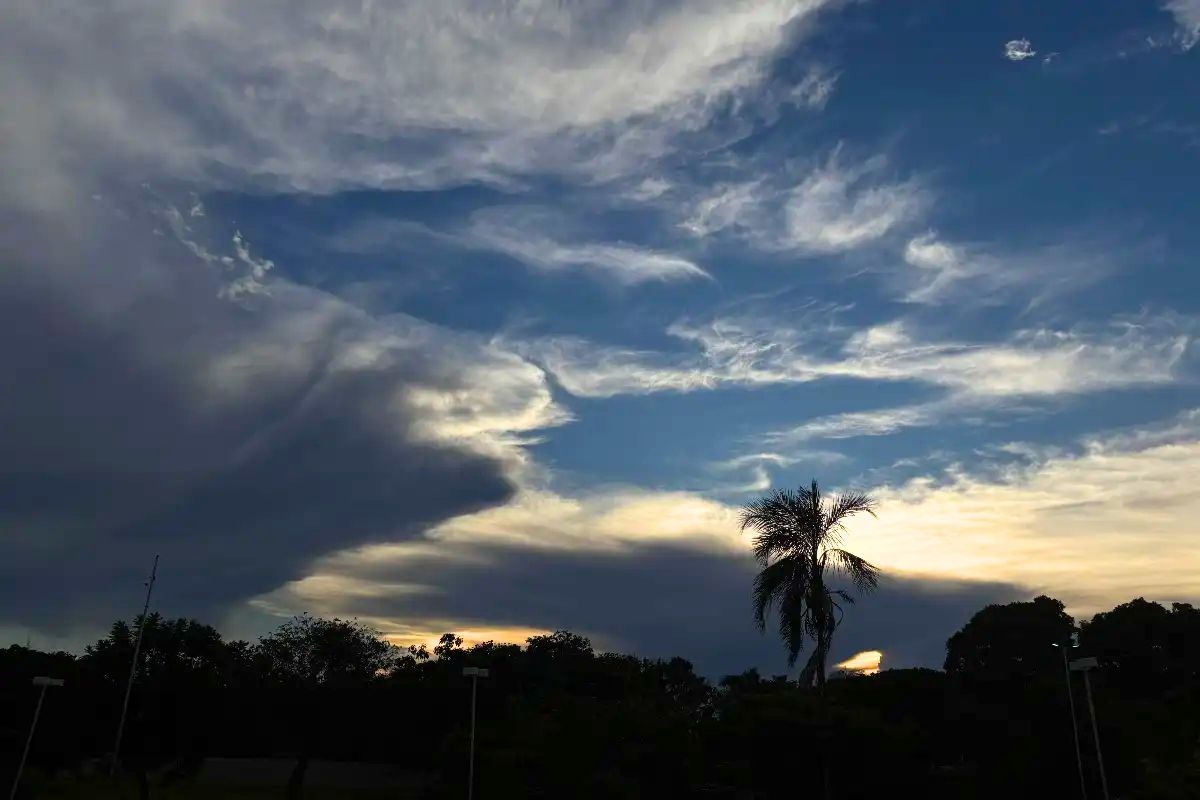
A cold front is set to arrive in Mato Grosso do Sul on Saturday, November 11th, initially impacting the southern regions of the state. Increased cloudiness is expected throughout the day, with rainfall predicted from the afternoon onwards. Some areas face a risk of thunderstorms accompanied by lightning and thunder. The heaviest rainfall is anticipated in the far south, though other cities may also experience precipitation, according to Climatempo. In Ponta Porã, approximately 5 millimeters of rain are forecast for Saturday, potentially intense with lightning and thunder, despite the low volume. Temperatures there will range from 20°C to 28°C, with the highest recorded in the afternoon before dropping at night due to the cold front's influence. The Civil Defense of Campo Grande has issued a storm risk alert for the capital from Saturday night (11 PM) through Sunday night (11:59 PM). The National Institute of Meteorology (Inmet) forecasts hourly rainfall between 20-30 mm, potentially reaching 50 mm daily, along with strong winds. This alert also indicates a low risk of power outages, falling tree branches, flooding, and electrical discharges. Campo Grande's Saturday will see firm weather with a high of 29°C, but temperatures are expected to drop to a maximum of 23°C on Sunday. A polar air mass advancing on Monday, November 13th, will cause further temperature decreases across Mato Grosso do Sul, bringing milder weather, though less intense than previous cold snaps.
The arrival of a cold front and subsequent polar air mass in Mato Grosso do Sul signifies a shift in regional weather patterns, impacting daily life and potentially infrastructure. While the immediate forecast focuses on precipitation and temperature changes, the broader implications involve preparedness for weather-related disruptions and the economic effects on agriculture and energy consumption. Future weather systems, influenced by evolving climate dynamics, may necessitate more robust public alert systems and resilient infrastructure planning to mitigate risks associated with extreme weather events. Understanding the interplay between atmospheric conditions and human activity is crucial for adapting to a changing climate.
AI-generated to prompt reflection — not editorial opinion, not advice, not a statement of fact. How this works.