Can Fashion Be Created Without Generating Waste?
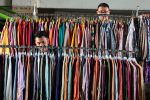
The textile industry in the Danube region is aiming for greater sustainability. A project involving Austrian participation is focusing on creative circular economy principles to achieve this goal.
The initiative seeks to transform how clothing is produced and consumed, emphasizing resource efficiency and waste reduction. By exploring innovative business models and production methods, the project intends to pave the way for a more environmentally friendly fashion sector. The emphasis is on designing products with their end-of-life in mind, promoting repair, reuse, and recycling.
This project addresses the significant environmental footprint of the global textile industry, which is characterized by linear 'take-make-dispose' models leading to substantial waste. By promoting circular economy principles in the Danube region, the initiative aims to decouple economic activity from the consumption of finite resources. The success of such projects hinges on systemic changes, including consumer behavior shifts, technological advancements in material recycling, and supportive regulatory frameworks. Future iterations will likely explore scalable solutions that can be integrated into existing supply chains, potentially influencing global fashion production standards and fostering a more resilient and sustainable industry.
AI-generated to prompt reflection — not editorial opinion, not advice, not a statement of fact. How this works.
