Can Horror Movies Cause Post-Traumatic Stress?
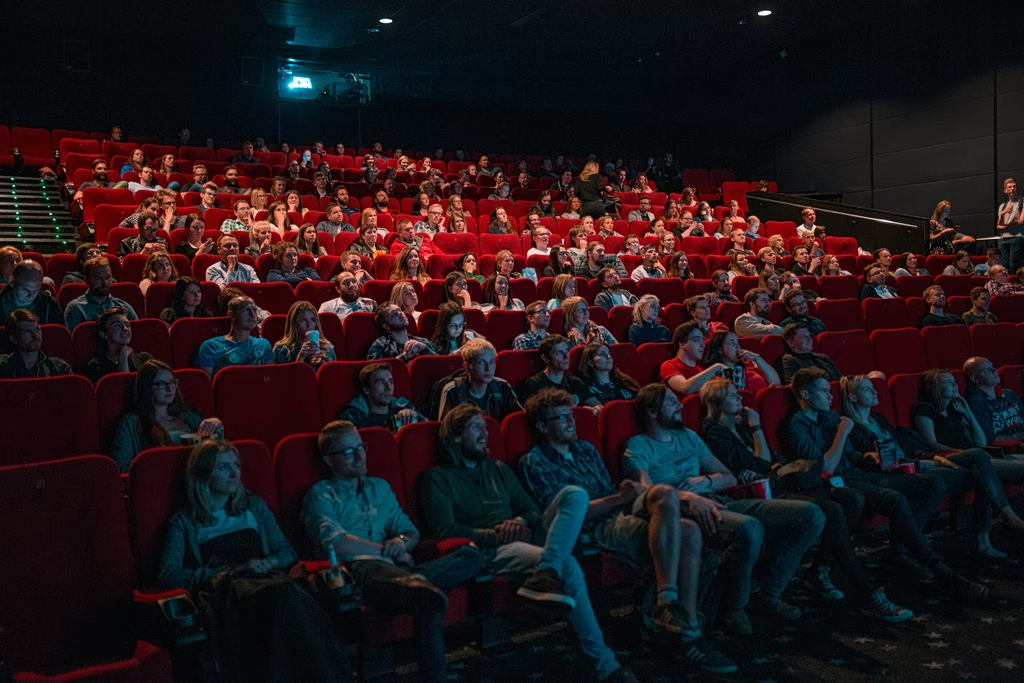
Horror movies offer a thrilling, adrenaline-pumping experience for some, while for others, they present a challenging spectacle that is difficult to endure. The varied reactions of viewers are not solely due to personal preferences but are influenced by how their brains function, their age, empathy levels, and past experiences. This nuanced response highlights the complex interplay between individual psychology and media consumption. The intensity of fear and anxiety evoked by horror films can vary significantly from person to person. Factors such as prior exposure to traumatic events can also shape an individual's perception and reaction to frightening content. Understanding these differences is crucial for appreciating the diverse impact of cinematic genres. The effectiveness of horror as entertainment is thus subjective, dependent on a multitude of internal and external factors. Consequently, a blanket statement about the universal effect of horror films is an oversimplification.
The subjective nature of viewer response to horror films, influenced by individual psychological factors, age, and life experiences, suggests that the medium itself is not inherently causative of post-traumatic stress disorder (PTSD). Instead, pre-existing vulnerabilities or sensitivities may be amplified by intense stimuli, leading to distress. Future media regulation and content advisories could benefit from acknowledging these individual differences, moving beyond broad age ratings to more nuanced guidance based on psychological profiles or known sensitivities. This approach would empower viewers to make more informed choices, aligning with a societal trend toward personalized experiences and risk mitigation in the digital age.
AI-generated to prompt reflection — not editorial opinion, not advice, not a statement of fact. How this works.