Can Some Women See Colors Others Cannot Due to Genetics?
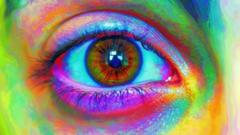
Approximately 12% of women are believed to possess a genetic trait that might grant them the ability to perceive a wider spectrum of colors. However, definitively proving that these individuals truly experience the world visually in a way that differs from others presents a significant scientific challenge. This genetic variation could potentially allow for the detection of more subtle color distinctions. Researchers face considerable hurdles in objectively measuring and verifying such subjective perceptual differences. The study of tetrachromacy, a condition where an individual has four types of cone cells in their eyes instead of the usual three, is relevant here. While tetrachromacy is more common in women due to the way color vision genes are inherited on the X chromosome, confirming its perceptual impact remains complex. The difficulty lies in designing experiments that can isolate and quantify these enhanced color perceptions. Scientists are exploring various methods to assess this phenomenon, but direct evidence of a qualitatively different visual experience is elusive. The potential implications for fields like art, design, and even scientific observation are considerable if this enhanced color perception can be conclusively demonstrated.
The potential for certain genetic variations, like those hypothesized to affect color perception in women, highlights the complex interplay between biology and subjective experience. While evolutionary pressures and genetic inheritance patterns can lead to diverse human capabilities, the challenge lies in objectively quantifying and verifying these differences. This situation underscores the limitations of current scientific methodologies in fully capturing the nuances of individual perception, particularly when subjective experience is involved. As technology advances, particularly in neuroscience and AI-driven data analysis, future research may offer more precise tools to investigate such phenomena. Understanding these variations could offer insights into the spectrum of human sensory experience and the biological underpinnings of perception, prompting further inquiry into how our genetic makeup shapes our interaction with the world.
AI-generated to prompt reflection — not editorial opinion, not advice, not a statement of fact. How this works.