Canada, Mexico, and USA Excel in FIFA World Cup, Leveraging Home Advantage
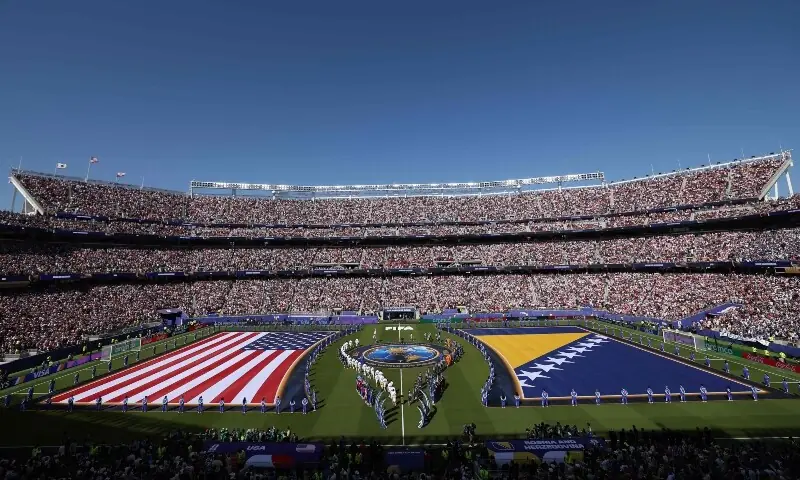
Co-hosts Canada, Mexico, and the USA are experiencing significant success in the FIFA World Cup, with home advantage playing a crucial role. Mexico has ended a 40-year wait for a knockout stage win by defeating Ecuador to reach the Round of 16, fueled by passionate fan support. Winger Julian Quinones has emerged as a star with three goals, and veteran striker Raul Jimenez has also found the net. Coach Javier Aguirre aims to match Mexico's best World Cup performance from 1970 and 1986 by reaching the quarter-finals. The city of Mexico City saw a reported one million people celebrate the victory over Ecuador.
The USA team has energized its nation, with a recent 2-0 win against Bosnia and Herzegovina becoming the most-watched football match in US television history, drawing 33.5 million viewers. Coach Mauricio Pochettino's high-energy attacking style has been successfully implemented, evident in their dominant 4-1 victory over Paraguay. Despite the suspension of star player Folarin Balogun, who has scored three goals, the team is confident heading into their Round of 16 match against Belgium, aiming for their second-ever quarter-final appearance.
Canada has made World Cup history by reaching the knockout stages for the first time, highlighted by a decisive 6-0 win against Qatar. After securing second place in their group, they achieved their first-ever knockout victory against South Africa in Los Angeles. Coach Jesse Marsch has praised his team as "Canadian heroes" and views their upcoming match against Morocco as an opportunity for further glory, despite the challenge posed by the 2022 semi-finalists.
The success of the co-hosting nations in the FIFA World Cup underscores the significant impact of home advantage and robust fan engagement on athletic performance. The widespread viewership and public celebration in Mexico and the USA indicate a growing integration of football into the national sporting landscape, potentially driven by the tournament's visibility and the teams' on-field achievements. As these nations advance, their performance not only reflects team strategy and player talent but also demonstrates the power of national unity and infrastructure in hosting large-scale international events. Future sporting events may increasingly prioritize localized fan bases and national pride as key determinants of success, alongside traditional competitive factors. The economic and social ripple effects of such widespread enthusiasm and viewership also warrant consideration for long-term development of the sport within these countries.
AI-generated to prompt reflection — not editorial opinion, not advice, not a statement of fact. How this works.