Canadian Astronaut Jeremy Hansen Retires After Artemis II Lunar Flyby
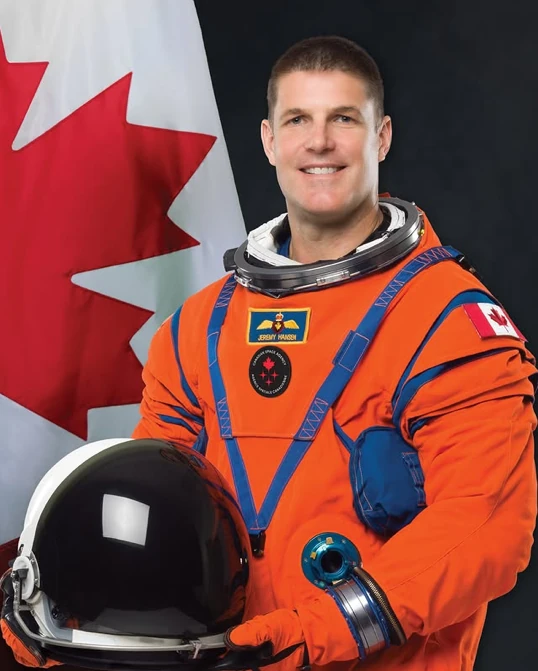
Jeremy Hansen, a Canadian astronaut who flew on NASA's Artemis II mission, will retire from the Canadian Space Agency (CSA) in September. Hansen, who previously served as a CF-18 pilot in the Royal Canadian Air Force (RCAF), was selected as an astronaut candidate by the CSA in 2009. He holds a degree in space science and a master's in physics. His career with the CSA includes participation in the European Space Agency's CAVES program in 2013, simulating space exploration in a cave, and NASA's NEEMO 19 mission in 2014, which simulated underwater exploration. In April 2023, it was announced he would join the Artemis II crew. During this mission, he became the first non-American astronaut to leave low Earth orbit and the first Canadian national to do so. His career spans 32 years of military service and 17 years as a CSA astronaut. Given his participation in Artemis II, it is unlikely he would have been selected for further missions. Hansen stated he will continue to support Canada's space endeavors as a reservist in the RCAF, seeking creative ways to facilitate essential work in the Canadian space sector and embracing new challenges. His departure leaves the CSA with three active astronauts: David Saint-Jacques, Joshua Kutryk, and Jenni Gibbons. It remains to be seen if and on which future missions they will participate.
Jeremy Hansen's retirement after the Artemis II mission, while personally motivated, highlights the cyclical nature of astronaut careers and the strategic planning required by space agencies. His transition to a reservist role with the RCAF indicates a continued commitment to national space objectives, leveraging his experience for future initiatives. This move also prompts consideration of the CSA's astronaut roster and the potential for its remaining active members to contribute to upcoming international space exploration efforts. As space programs evolve, agencies must balance experienced personnel transitions with the development and deployment of new talent to maintain operational capacity and achieve long-term exploration goals.
AI-generated to prompt reflection — not editorial opinion, not advice, not a statement of fact. How this works.