Canadian Town's Decades-Long Stench of Rotting Fish Sauce Nears End
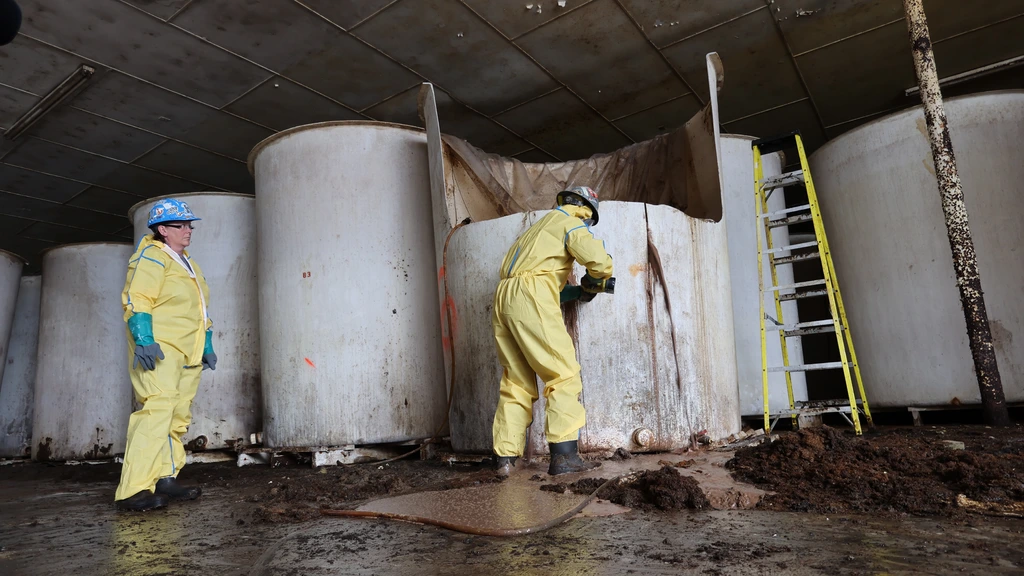
Residents of the small Canadian coastal town of St. Mary's, Newfoundland and Labrador, are finally seeing an end to a decades-long problem: over a million liters of fermenting fish sauce. The Atlantic Seafood Sauce Company, which opened in 1990, ceased operations in the early 2000s following a legal dispute, leaving behind 110 tanks, each holding over 11,000 liters of the pungent liquid. Over the years, the sauce has fermented, and the dilapidated factory building, with its missing roof and collapsed walls, offers little containment for the overwhelming odor. Cleanup operations commenced last Tuesday, a moment eagerly anticipated by the town's 300 inhabitants. The provincial government has allocated 1.7 million Canadian dollars (over 1 million euros) for the extensive remediation project. Specialized contractors are employed to cut open the tanks and mix the fish sauce with peat moss to absorb it, after which it will be vacuumed up. Approximately 200 trucks will transport the mixture, using large hoses, to Sunnyside, a town two hours away. In Sunnyside, the substance will be deposited into a specially excavated 2,000-cubic-meter waste pit, which will then be covered with earth, effectively sealing the odor. The cleanup is expected to take several months, with completion anticipated by October. Mayor Steve Ryan expressed confidence in the team's ability to overcome challenges, while Environment Minister Tibbs looks forward to the day St. Mary's is free from the lingering smell.
This situation highlights the long-term environmental and public health consequences of industrial waste mismanagement. The delayed cleanup, spanning over two decades, underscores the challenges in addressing legacy pollution, particularly when it involves hazardous or malodorous substances. The significant financial investment and specialized logistical approach required for remediation demonstrate the escalating costs associated with environmental neglect. From a systems perspective, this incident points to potential gaps in regulatory oversight and enforcement mechanisms that allow such hazardous materials to remain unaddressed for extended periods. The successful resolution, contingent on ongoing efforts, offers a case study in environmental remediation, emphasizing the importance of proactive waste management and timely intervention to mitigate community impact and prevent future environmental liabilities.
AI-generated to prompt reflection — not editorial opinion, not advice, not a statement of fact. How this works.