Canadian wildfire smoke blankets Toronto and New York, causing air quality alerts
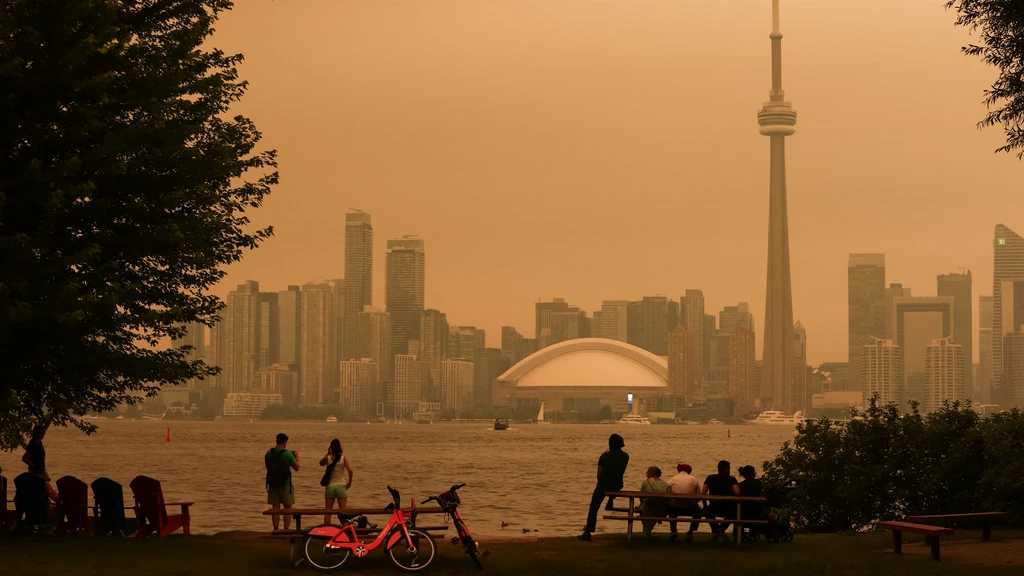
Wildfires in Canada's Ontario province have caused severe air quality issues in Toronto, Canada's largest city. Authorities have issued warnings, advising residents to minimize outdoor activity due to an orange haze over the city. IQAir, a Swiss air quality technology firm, reported Toronto's air quality as the worst among major global cities at that time. The weather and environment service cautioned that people might experience eye, nose, and throat irritation, recommending that windows and doors remain closed and outdoor events be postponed or canceled. Approximately 150 wildfires are currently burning in northwestern Ontario, with only a few under control. The smoke is expected to persist in the area until at least the following day. Toronto has opened six public spaces, including City Hall, for residents lacking air conditioning or air filters, particularly those who are homeless. Beyond Toronto, the smoke has also reached the northeastern United States, prompting health advisories in New York City and surrounding areas. Residents are similarly advised to limit outdoor activities. An air quality researcher from Columbia University suggested that the worst of the smoke impact might still be ahead for New York City and the broader northeastern U.S. region, potentially lasting through the end of the week. In neighboring New Jersey, over 80,000 spectators are expected for the World Cup final between Spain and Argentina at the open-air MetLife Stadium, raising concerns about exposure.
The widespread impact of Canadian wildfires on major North American cities highlights the transboundary nature of environmental crises in an era of escalating climate change. This event underscores the vulnerability of densely populated urban centers to atmospheric conditions driven by distant natural disasters, necessitating robust intergovernmental cooperation on wildfire management and air quality monitoring. The situation also points to the growing need for resilient urban infrastructure, including public spaces equipped to filter air, and advanced public health communication strategies to protect vulnerable populations during environmental emergencies. Looking ahead, the increasing frequency and intensity of such events may necessitate a re-evaluation of urban planning and public health preparedness, particularly for large-scale outdoor events.
AI-generated to prompt reflection — not editorial opinion, not advice, not a statement of fact. How this works.