Canadian Wildfire Smoke Threatens Soccer World Cup Final in New Jersey
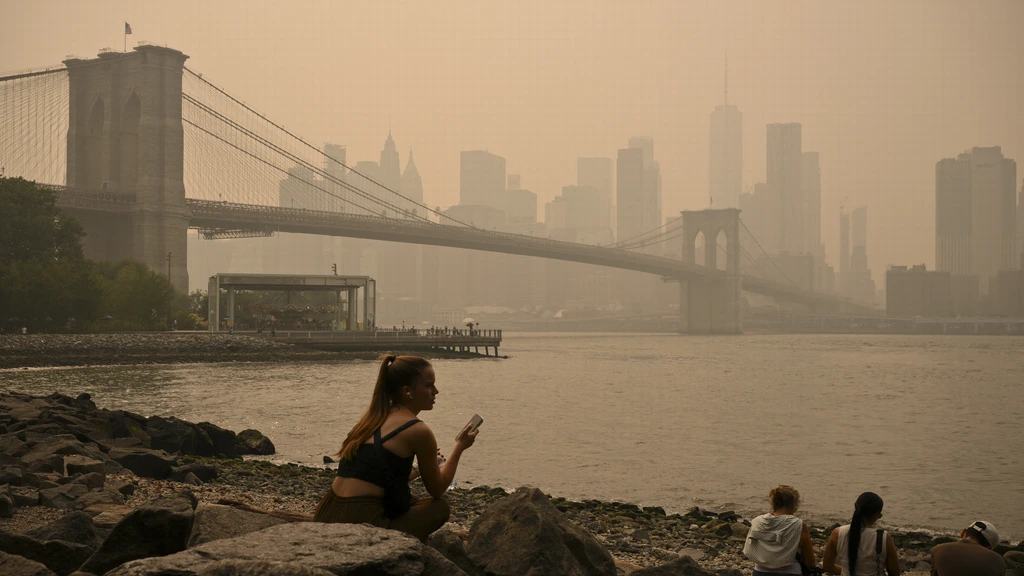
Smoke from extensive wildfires in Canada and the northeastern United States is posing a significant threat to the Soccer World Cup final in New Jersey. Data from the European Earth observation program Copernicus indicates severe air quality degradation in the region due to the fires. Consequently, cities like New York and Philadelphia have elevated warning levels in effect. New Jersey, where the MetLife Stadium is set to host approximately 80,000 spectators for the final on Sunday, is also experiencing very poor air quality. Forecasters anticipate a slight reduction in smoke density over the coming days, and expected rain on Saturday evening and Sunday may offer some relief. The tournament has already been impacted by extreme weather events, including heat, heavy rainfall, and severe thunderstorms, and now faces the consequences of major wildfires. Forbes and other American media outlets are questioning whether the wildfire smoke will disrupt the World Cup final, with New York City residents advised to stay indoors. Despite the poor air quality, the Spanish national team trained outdoors in New Jersey yesterday. Climate scientists link climate change to more favorable conditions for wildfires, citing higher temperatures and increased drought leading to drier vegetation, which allows fires to spread more easily and become more extreme. Conversely, wetter periods, exacerbated by climate change, can also create conditions for larger fires by promoting vegetation growth that then serves as fuel during dry spells. Canada is experiencing an exceptionally severe and early wildfire season, with emissions comparable to the record years of 2023 and 2014, according to the Copernicus Atmosphere Monitoring Service (CAMS). These fires release toxic substances and harmful fine particulate matter that can penetrate deep into the lungs and enter the bloodstream. The widespread exposure to these pollutants from such immense wildfires is a known issue, with an estimated 345 million Americans and Europeans having inhaled these particles in 2023. Scientists estimate that over 70,000 deaths were linked to these fires in that year. CAMS scientist Mark Parrington noted that the smoke is expected to travel across the North Atlantic, potentially towards Europe, highlighting the vast scale of pollution from these wildfires. Air pollution from these events can be detected thousands of kilometers away. An international commission established by the World Health Organization (WHO) previously warned about the far-reaching health effects of climate change, specifically mentioning the increasing intensity of large wildfires and associated air pollution.
The convergence of major international sporting events with severe environmental crises, such as widespread wildfires exacerbated by climate change, highlights systemic vulnerabilities in global event planning and public health preparedness. The displacement of smoke pollution across vast distances underscores the interconnectedness of environmental impacts and the limitations of localized mitigation strategies. This situation prompts a re-evaluation of risk assessment protocols for outdoor events, particularly concerning the long-term implications of climate change on air quality and public health. Future event planning will need to integrate more robust environmental monitoring and contingency measures, acknowledging that the 'natural' environment is increasingly influenced by anthropogenic factors. The economic and social costs associated with such disruptions, including potential health impacts on athletes and spectators, necessitate proactive adaptation strategies and a deeper commitment to addressing the root causes of climate change.
AI-generated to prompt reflection — not editorial opinion, not advice, not a statement of fact. How this works.