Canadian wildfire smoke triggers air quality alerts across major US cities
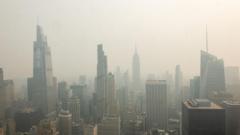
Smoke originating from over 800 wildfires in Canada has significantly impacted air quality across major North American cities. Major urban centers, including Toronto and New York City, have been blanketed by the haze. The smoke plumes have also extended to affect parts of the US Midwest and the Great Lakes region. This widespread pollution event highlights the transboundary nature of environmental challenges posed by large-scale wildfires. Residents in affected areas are advised to take precautions due to the degraded air quality. The scale of the fires underscores the growing concern over climate change and its potential to exacerbate such environmental events. Authorities are monitoring the situation closely and providing updates on air quality indices. The long-term implications for public health and ecosystems are a growing area of focus.
The extensive smoke from Canadian wildfires underscores the interconnectedness of environmental systems across continents. This event demonstrates how localized environmental disasters can rapidly escalate into regional public health crises, necessitating cross-border cooperation and coordinated response strategies. The recurring nature of such incidents, amplified by potential climate change impacts, points to the need for proactive, long-term solutions in wildfire management and air quality monitoring. Future policy considerations may involve enhanced international agreements on resource sharing and disaster preparedness, alongside investments in climate resilience and sustainable land management practices to mitigate the frequency and intensity of such events.
AI-generated to prompt reflection — not editorial opinion, not advice, not a statement of fact. How this works.