Candiru Fish Swarm Devours Alligator Carcass in Brazil's Madeira River
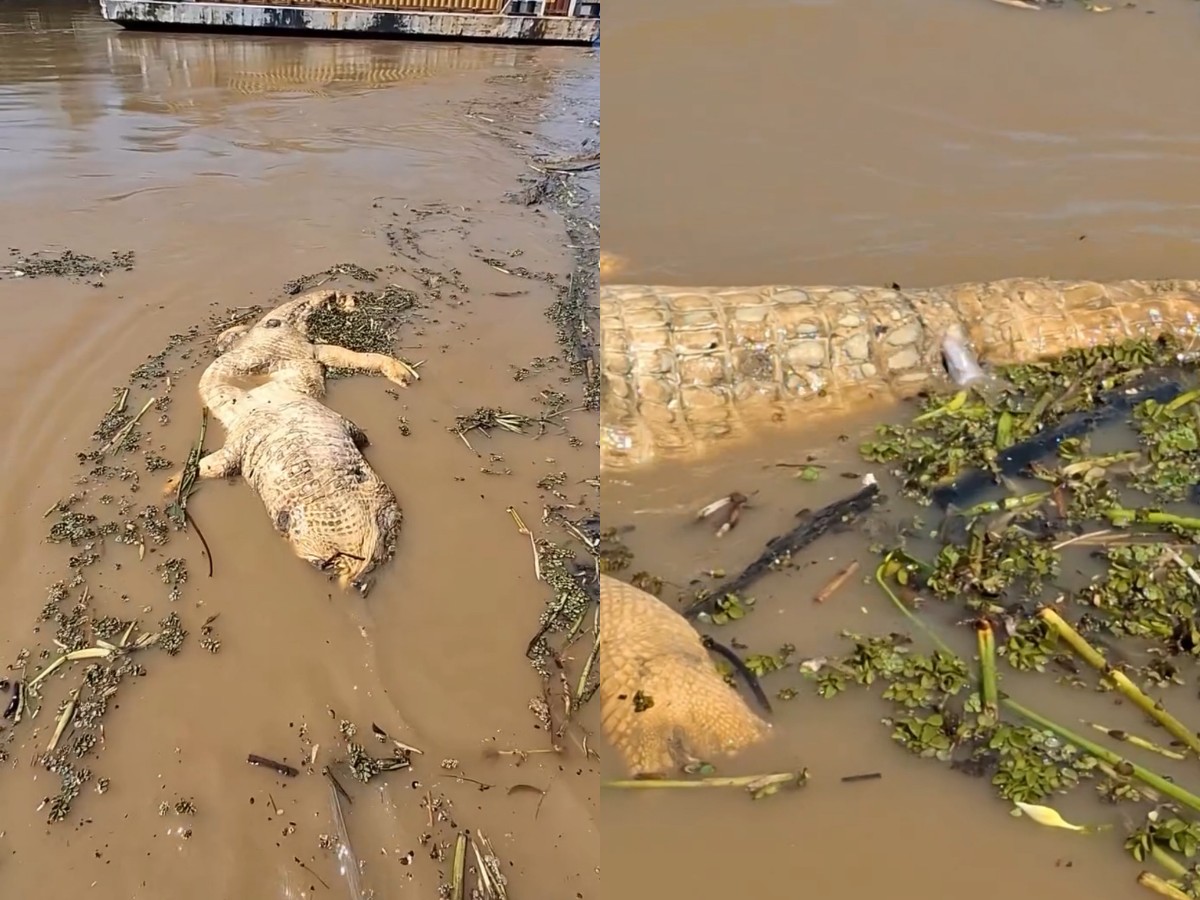
A fisherman named Airton Viana captured a striking video in early July showing a swarm of candiru fish consuming the carcass of an alligator in the Madeira River, near Porto Velho, Brazil. The footage, taken near the Rondon-Roosevelt Bridge, reveals the fish eating the alligator from the inside out. Viana, who was creating content about candirus for his social media followers, encountered the scene while navigating the river. The video has since garnered over 68,000 views online. Biologist Flavio Terassini explained that the species observed is the candiru-açu, a scavenger that feeds on dead flesh, distinguishing it from the hematophagous candirus known for feeding on blood. Terassini emphasized that this scavenging behavior is common in the Madeira River and that candirus play a vital role in cleaning organic waste. He clarified that while popular myths suggest candirus attack humans, they primarily target deceased animals. Fernando Dagosta, a freshwater fish researcher, further described the candiru-açu as a type of catfish with well-developed teeth for tearing flesh. These fish inhabit dark-water rivers like the Madeira and its tributaries, often forming large schools. Their highly developed sense of smell allows them to locate carcasses efficiently, even in murky conditions, often reaching dead animals before other scavengers like piranhas.
This event highlights the natural ecological processes of decomposition and scavenging within the Amazonian river ecosystem. The candiru-açu's role as a detritivore is crucial for nutrient cycling and waste removal, demonstrating a vital function often overshadowed by sensationalized accounts of the species. The stark visual serves as a reminder of the raw, efficient mechanisms of nature. Understanding these biological roles, rather than succumbing to fear-based narratives, allows for a more informed appreciation of riverine biodiversity and the interconnectedness of life and death within these environments. Future ecological management and public perception should focus on the scientific contributions of such species to ecosystem health.
AI-generated to prompt reflection — not editorial opinion, not advice, not a statement of fact. How this works.