Candles Ignited by Devotees Likely Cause of Fire Destroying Religious Statue in Brazil
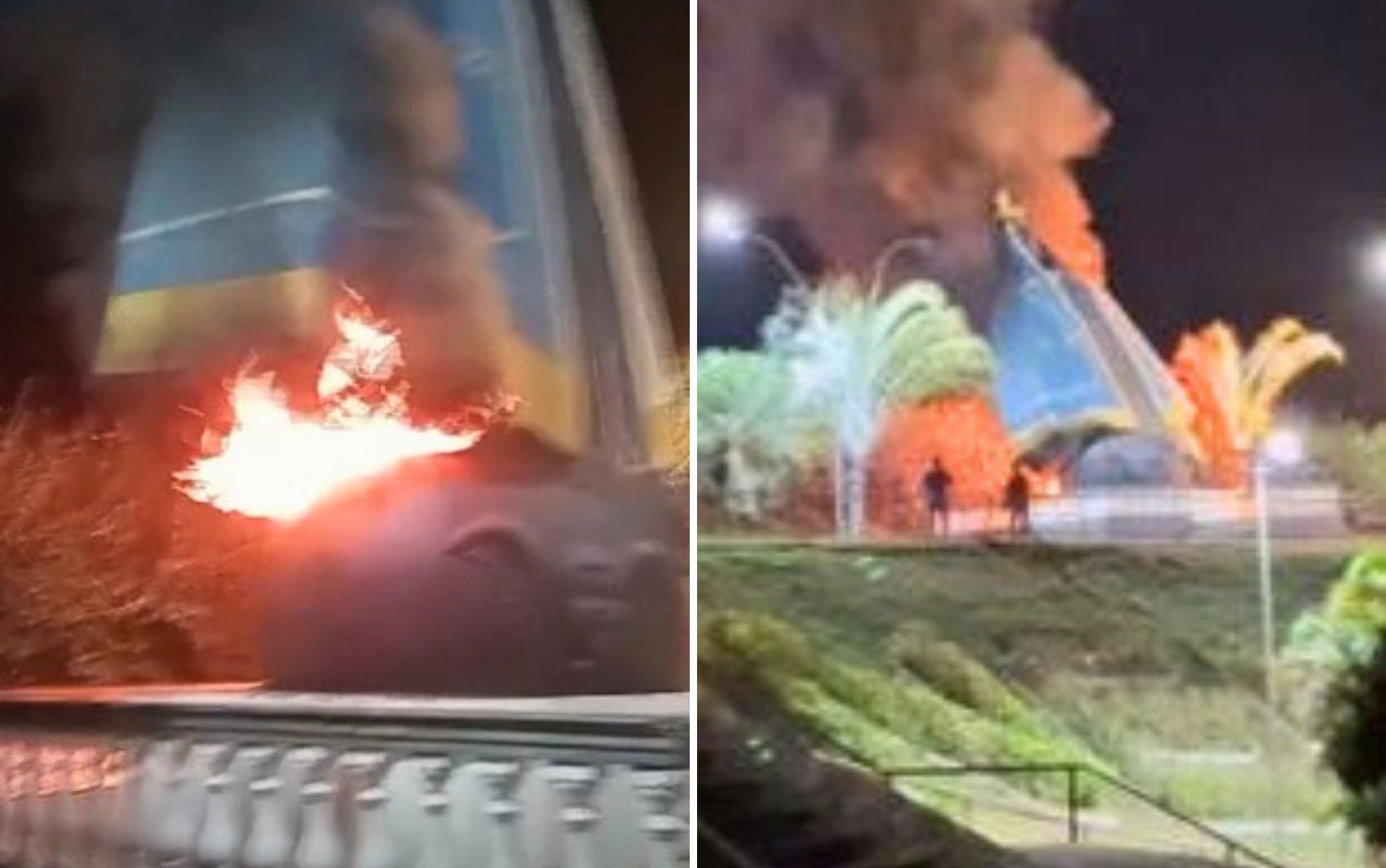
A fire that completely destroyed a four-meter-tall fiberglass statue of Nossa Senhora (Our Lady) in Nerópolis, Goiás, Brazil, on the evening of Monday, May 13th, is believed to have started after a family lit candles near the monument. Police delegate André Fernandes stated that the family lit the candles to give thanks for a granted grace for their son, having achieved this grace earlier in May. Approximately two hours after they left the site, the family learned of the fire. While evidence points to the candles as the cause, Fernandes noted that technical details are still being investigated and the exact cause has not been definitively confirmed. The incident occurred around 9 PM and, fortunately, resulted in no injuries. The statue was a significant religious, cultural, and affective heritage for the city. Following the event, the Nerópolis City Hall convened with representatives from the Catholic Church, Fire Department, Military Police, and other authorities to assess the damage. The City Hall has committed to taking the necessary steps for the reconstruction of the statue, adhering to all legal and technical requirements. Measures to enhance area monitoring and security are also planned.
The incident highlights the critical need for public safety protocols at sites of religious significance, particularly when devotional practices involving open flames are permitted. While the immediate cause appears to be accidental, stemming from a well-intentioned act of gratitude, the event underscores a systemic vulnerability. Future planning for such monuments should integrate fire safety assessments and potentially designated, controlled areas for candle lighting to prevent recurrence. This situation also presents an opportunity for local governance to collaborate with religious institutions on public awareness campaigns regarding fire risks associated with religious rituals, balancing spiritual expression with physical safety.
AI-generated to prompt reflection — not editorial opinion, not advice, not a statement of fact. How this works.