Captain's Error Led to Italy's 'Titanic' Disaster
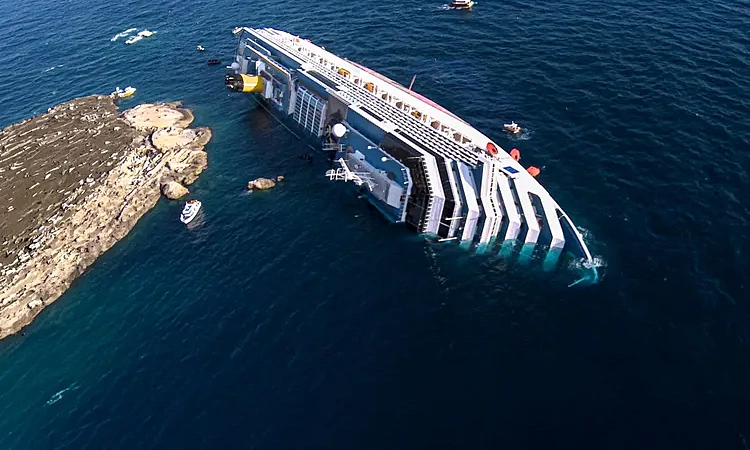
A navigational error by the captain caused the cruise ship Costa Concordia to sail too close to the island of Giglio, resulting in a collision with rocks. This tragic incident led to the deaths of 32 people. Adding to the disaster, the captain reportedly abandoned the ship while many passengers were still awaiting evacuation. The grounding of the Costa Concordia occurred off the coast of Italy, becoming known as Italy's 'Titanic' disaster due to its scale and the circumstances surrounding the loss of life. The investigation into the event focused on the captain's decisions and actions leading up to and during the grounding. The ship, a large luxury liner, was carrying numerous passengers and crew at the time of the incident. The subsequent rescue and recovery operations were complex and challenging. The disaster highlighted significant concerns regarding maritime safety protocols and emergency response procedures in the cruise industry. The captain faced legal repercussions for his role in the incident.
The Costa Concordia disaster serves as a stark case study in human error and leadership failure within complex operational environments. The captain's decision to deviate from a safe course and then abandon ship prematurely, while passengers remained in peril, directly contradicts established maritime safety principles and emergency protocols. This event underscores the critical importance of robust training, adherence to standard operating procedures, and the ethical imperative for commanders to prioritize passenger safety above all else. Future maritime safety frameworks may benefit from enhanced real-time monitoring systems, stricter enforcement of navigational rules, and improved communication strategies during crises to mitigate the impact of individual judgment errors and ensure more effective evacuation processes.
AI-generated to prompt reflection — not editorial opinion, not advice, not a statement of fact. How this works.