Capuchin Monkey Rescued from Balcony in Brazil; Fake Documents Discovered
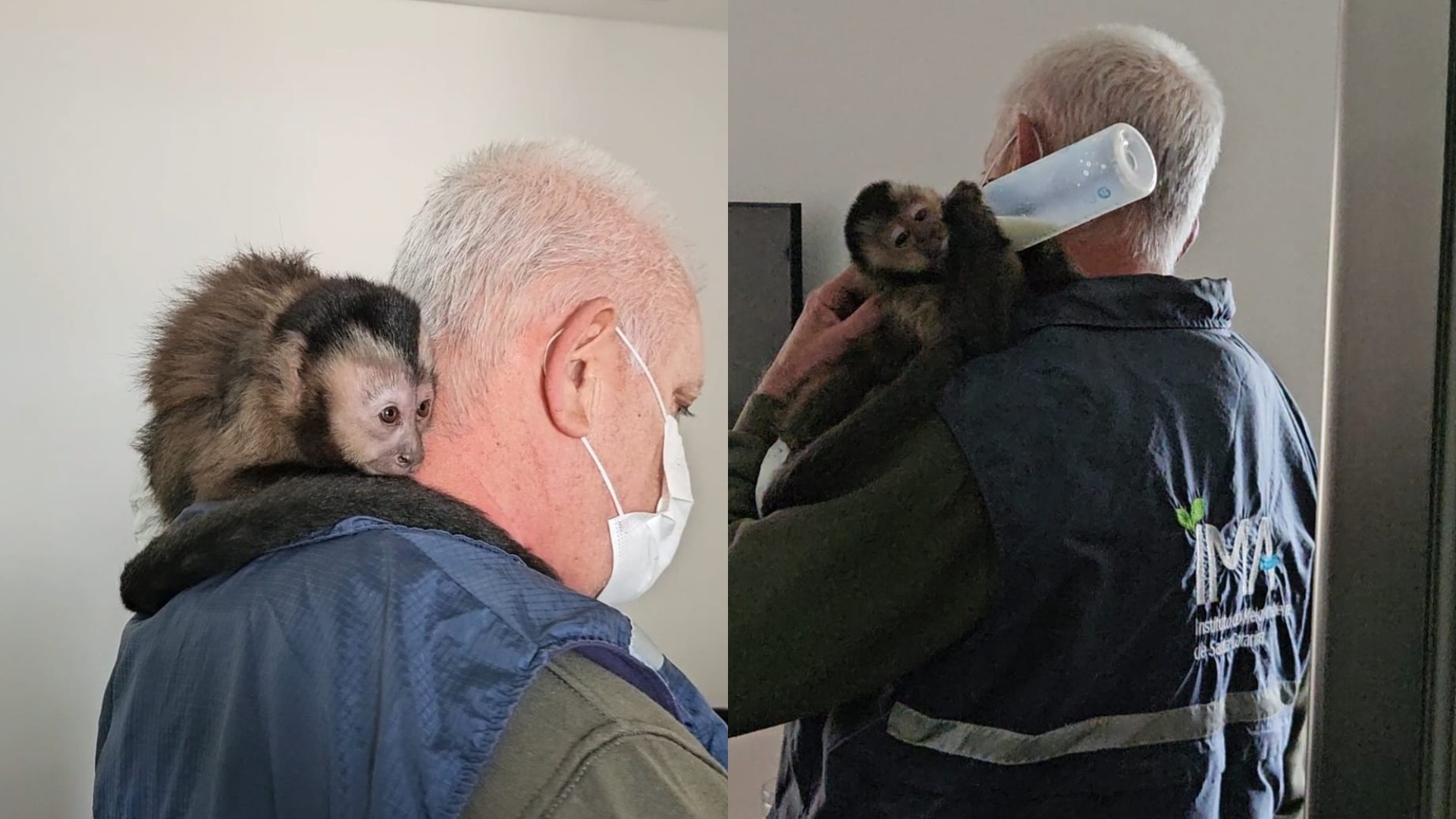
A capuchin monkey was rescued from the balcony of an apartment building in Itapema, Santa Catarina, Brazil, on June 17th, after being found in danger of falling. The rescue operation, conducted by the Grupo de Operações e Resgate (GOR) and firefighters, also uncovered falsified documentation related to the animal. The primate was subsequently seized and is currently undergoing rehabilitation. Authorities confirmed on Sunday, June 5th, that the monkey's certificate of origin was indeed fake, with other documents still under technical analysis by biologists and relevant agencies. Following the discovery of the forgery, a follow-up operation on June 25th, involving the Instituto do Meio Ambiente de Santa Catarina (IMA) and the Fundação Ambiental Área Costeira de Itapema (Faaci), led to the seizure of the monkey from the new address of its former keepers. The GOR stated that the monkey is being rehabilitated and, if successful, will be returned to the wild. If reintroduction is not possible, the monkey will be placed in a sanctuary or zoo. The individuals responsible for the animal will face administrative and criminal proceedings under the Environmental Crimes Law, highlighting that the irregular trade and keeping of wild animals is illegal. Itapema is noted as having the most expensive square meter in Brazil.
The incident highlights the complex challenges in regulating the exotic pet trade, particularly concerning the welfare of wild animals and the integrity of documentation. The discovery of falsified documents suggests a potential black market for illegally obtained or held wildlife, driven by demand and facilitated by fraudulent paperwork. This situation underscores the need for robust enforcement mechanisms and public awareness campaigns to deter illegal ownership and ensure that any kept animals are properly documented and cared for according to established wildlife regulations. Future efforts should focus on strengthening oversight of animal provenance and penalizing those who circumvent legal frameworks, thereby protecting both animal welfare and ecological balance.
AI-generated to prompt reflection — not editorial opinion, not advice, not a statement of fact. How this works.