Car Collides with Ambulance, Causing Secondary Crash with Police Vehicle in Guarujá
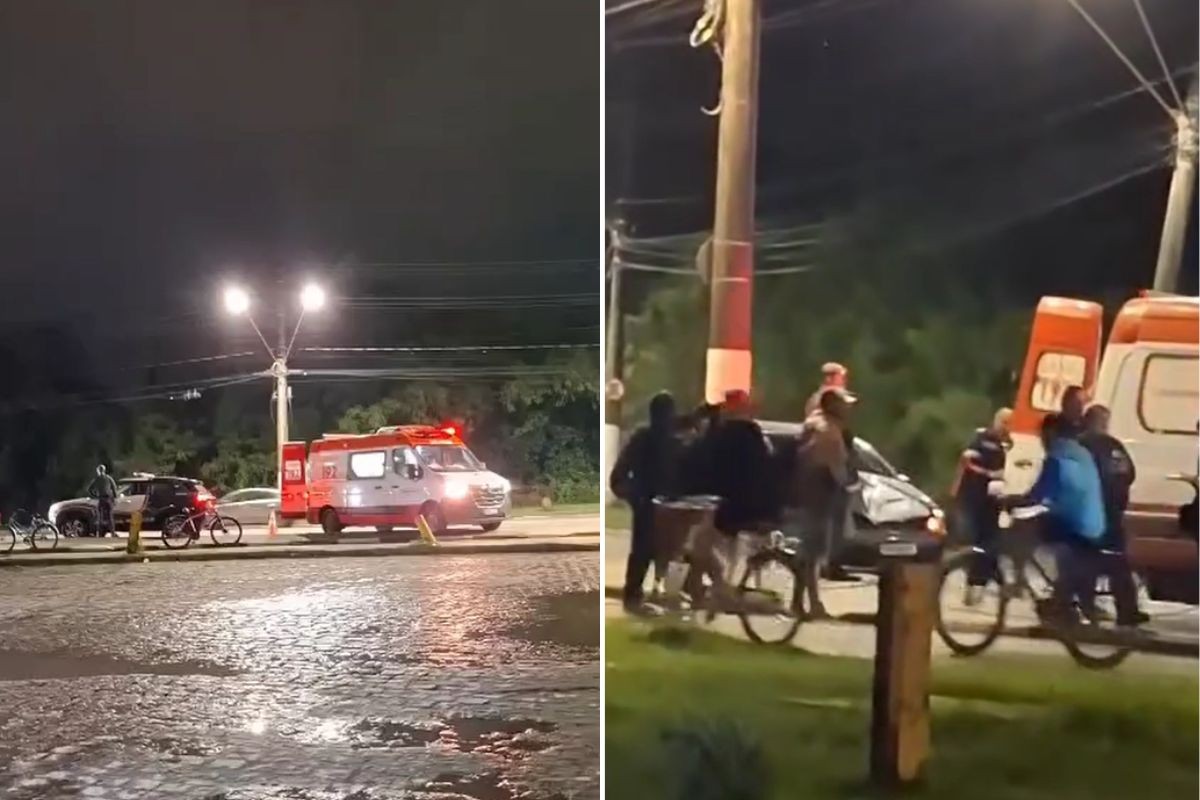
An ambulance from the Mobile Emergency Care Service (Samu) was struck by a car while attending to an injured cyclist in Guarujá, on the coast of São Paulo, Brazil. The impact caused the ambulance to then collide with a Military Police vehicle that was positioned in front of it. Fortunately, no one was injured in this secondary accident. The driver of the car that initiated the collision underwent an alcohol breathalyzer test, which returned a negative result. The incident occurred on Avenida Santos Dumont on the evening of Wednesday, May 8th. The Samu team had been dispatched to a traffic incident involving a cyclist who had been hit by an electric bicycle. While the ambulance was stopped with its emergency lights activated, the car crashed into it, leading to the ambulance hitting the police car. Images circulating on social media show the car involved and another Samu ambulance continuing the care for the cyclist. The car sustained front-end damage, and the ambulance had damage to a rear door, requiring maintenance. A second Samu ambulance was sent to complete the medical assistance for the cyclist. Traffic in the area was disrupted for approximately 30 minutes before being reopened. Police authorities were informed of the events and deemed it unnecessary to formally register the occurrence.
This incident highlights the inherent risks faced by emergency responders and the critical need for robust traffic safety protocols, particularly around active emergency scenes. The collision underscores the importance of driver attentiveness and adherence to traffic laws, even when emergency vehicles are present with activated lights. From a systemic perspective, the event prompts consideration of infrastructure design and traffic management strategies in areas with frequent incidents, aiming to create safer buffer zones for emergency operations. Future planning should explore technological solutions and public awareness campaigns to minimize such preventable disruptions and ensure the safety of both first responders and the public they serve.
AI-generated to prompt reflection — not editorial opinion, not advice, not a statement of fact. How this works.