Car Explosions in Movies: Science vs. Hollywood
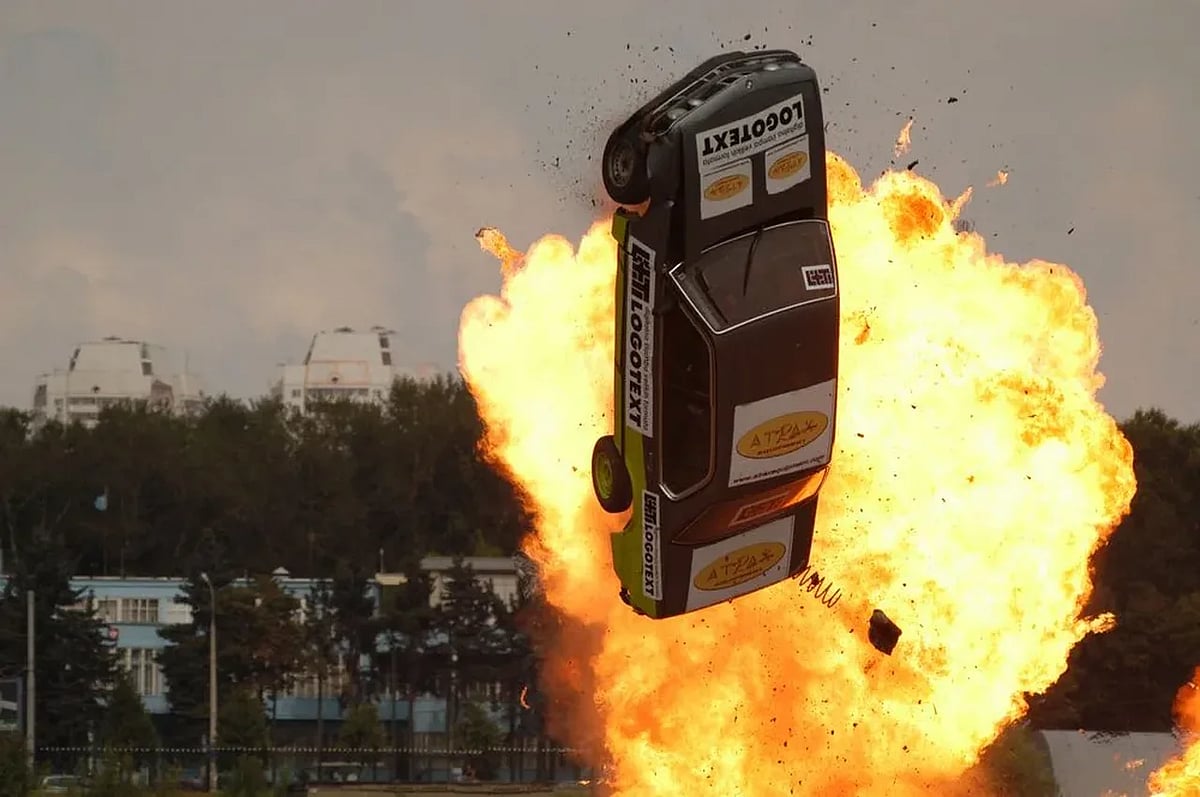
The dramatic car explosions often depicted in Hollywood action films, such as those in Fast & Furious or James Bond movies, are largely a product of cinematic illusion rather than reality. While these scenes are thrilling on screen, the science behind real-world car accidents does not typically support such spectacular detonations. An explosion, scientifically defined by thermodynamics, requires a rapid expansion of volume and release of energy within a confined space. This process necessitates a combustible substance, an oxidizer like oxygen, and an ignition source, all occurring under high pressure.
Everyday cars operate on the principles of thermodynamics through their four-stroke engines, which involve controlled explosions of fuel-air mixtures within cylinders to generate power. However, liquid gasoline itself is not inherently explosive; it must first vaporize and mix with air in a specific ratio (1.4% to 7.6%) to become combustible. Modern car fuel tanks are designed to contain this vapor safely and are not built to withstand or generate the high pressures needed for a large-scale explosion. If a fuel tank leaks, the vapor disperses into the open air, preventing the confined conditions required for an explosion.
In reality, if a car catches fire, it typically burns with flames and smoke rather than exploding. Leaked or heated fuel ignites and burns off quickly in open air without building pressure. Statistics indicate that most car fires originate from mechanical failures (45%) or electrical short circuits (21%), not the fuel tank itself. While traditional gasoline cars are highly unlikely to explode like in movies, the advent of electric vehicles (EVs) presents a different scenario. Damaged lithium-ion battery packs in EVs can undergo a thermal runaway, a chain reaction generating intense heat and flammable gases within the sealed pack, leading to rocket-like flames that resemble explosions and can reignite days later, posing significant challenges for firefighters.
The dramatic portrayal of car explosions in media highlights a common public perception gap regarding the physics of combustion and vehicle safety. While cinematic liberties are taken for entertainment, understanding the scientific principles—combustibility, confinement, and ignition—reveals why such events are rare in conventional vehicles. The analysis of electric vehicles introduces a new dynamic, where battery technology, while offering environmental benefits, presents unique safety challenges due to thermal runaway. This suggests a need for evolving safety standards and public education to address the distinct risks associated with emerging technologies, moving beyond the sensationalized narratives of fiction to informed risk assessment for the future.
AI-generated to prompt reflection — not editorial opinion, not advice, not a statement of fact. How this works.