Caraguatatuba Schools Damaged by 70 km/h Winds, Classes Suspended
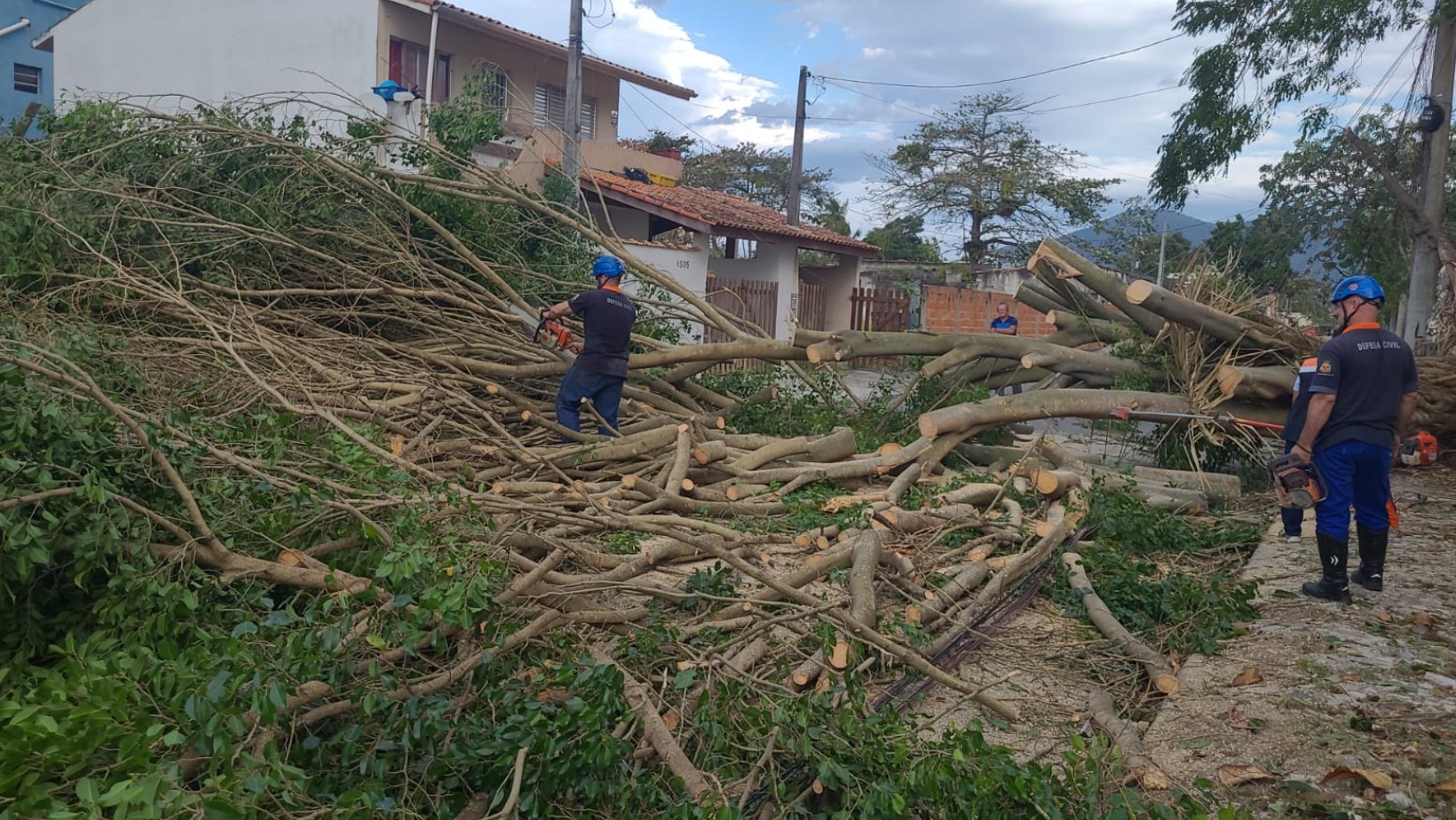
Strong winds with gusts reaching up to 90 km/h caused significant damage in Caraguatatuba, located in Brazil's Litoral Norte region, on Wednesday afternoon and evening, November 29th. The severe weather led to roofs being torn off schools, trees being uprooted, homes being damaged, and several streets becoming impassable. As a result, classes were suspended on Thursday, November 30th, at one municipal school, the EMEI/EMEF Adaly Coelho Passos de Castro Graziotti in the Rio do Ouro neighborhood, to allow for emergency repairs and ensure the safety of students and staff. The municipal government reported that 12 municipal schools and the Municipal Secretariat of Education sustained damage, primarily roof damage. In addition to school disruptions, fallen trees blocked several roads, including Estrada Aba de Dentro in Pegorelli, Alameda José Francesconi and Rua Sebastião Ferreira dos Santos in Porto Novo, Rua Sebastião Francisco da Silva in Travessão, and Avenida Inácio Ferreira in Praia das Palmeiras. Avenida Fioravante Pascoalin in Martim de Sá was cleared on Wednesday night. The strong winds also affected residential properties, with a family in Pegorelli receiving social assistance after their precarious home was hit. In Massaguaçu, other residences were compromised by collapses in risk areas. Although no families accepted municipal shelter, they are temporarily staying with neighbors, and the municipality has provided essential supplies such as mattresses, blankets, food baskets, milk, diapers, and hygiene kits. The Civil Defense initially reported wind gusts of approximately 70 km/h, leading to around 20 incidents, mostly involving trees falling onto the power grid. Fortunately, no injuries were reported. The Civil Defense remains on alert and advises the public to avoid areas with compromised trees, stay clear of fallen power lines, and contact 199 for emergencies, while the Fire Department can be reached at 193.
The severe weather event in Caraguatatuba highlights the vulnerability of public infrastructure, particularly educational facilities, to extreme weather conditions. The damage to 12 municipal schools and the Secretariat of Education underscores the need for resilient infrastructure planning and maintenance, especially in areas prone to high winds. The prompt response in providing essential aid to affected families demonstrates municipal capacity for emergency relief, though the fact that families in precarious housing were impacted suggests underlying socio-economic vulnerabilities. The incident also points to the importance of robust early warning systems and public communication protocols for natural hazards. Future urban planning and building codes in such regions should consider climate change projections and the increasing frequency of extreme weather events to mitigate future risks and ensure continuity of essential services like education.
AI-generated to prompt reflection — not editorial opinion, not advice, not a statement of fact. How this works.