Carnivorous Plant Confirms Darwin's 150-Year-Old Hypothesis
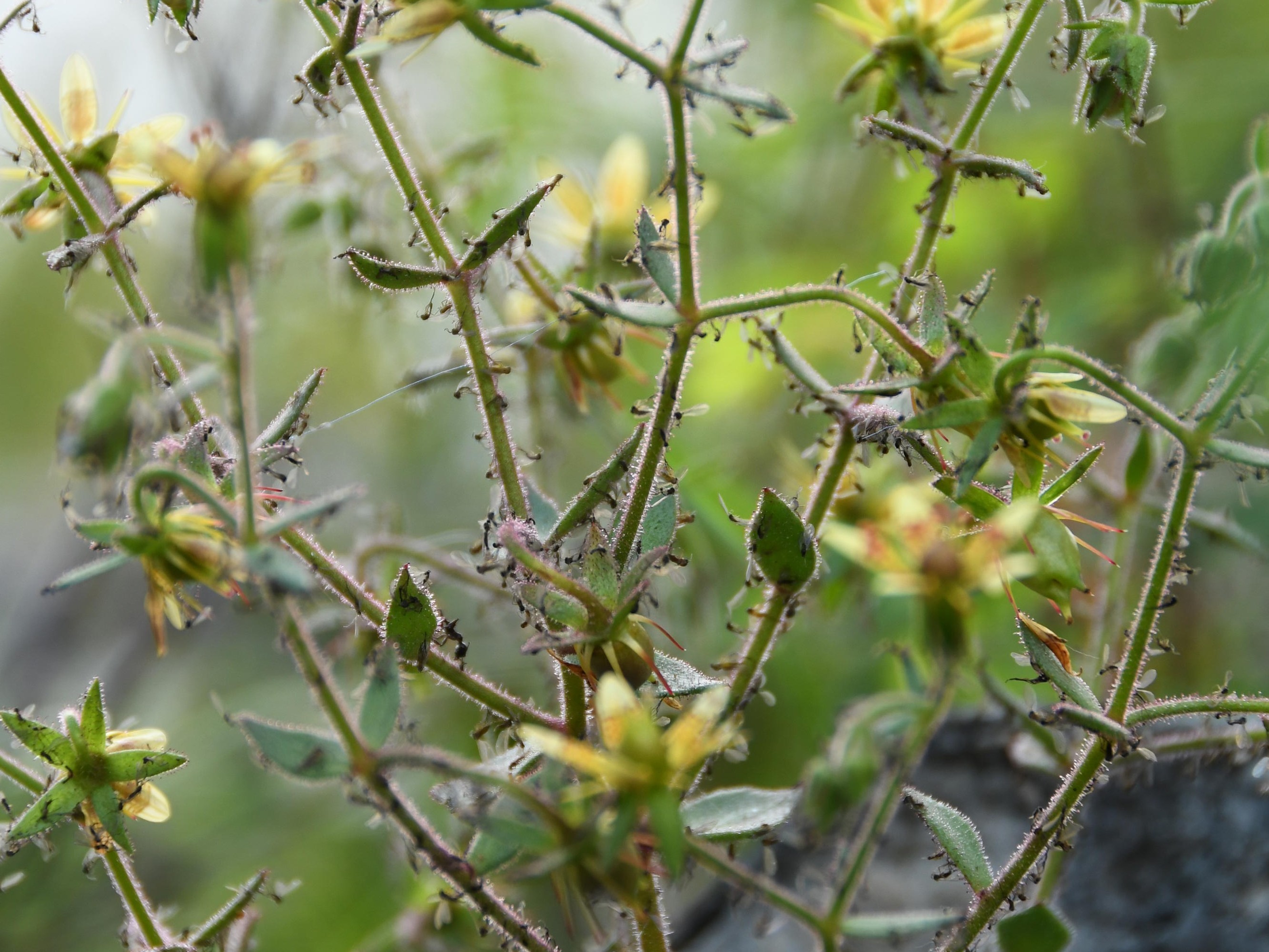
Researchers have confirmed that Saxifraga candelabrum, a small plant found in the Himalayas and Tibet, is carnivorous, validating a hypothesis proposed by Charles Darwin over 150 years ago. Darwin had observed in his 1875 book "Insectivorous Plants" that some Saxifraga species had sticky glandular hairs similar to known carnivorous plants, on which insects often became trapped. However, he lacked conclusive proof of digestion, leaving the idea unconfirmed for generations. A team led by Hang Sun from the Kunming Institute of Botany in China utilized modern scientific tools to rigorously test the plant's carnivorous capabilities. To be classified as carnivorous, a plant must attract, capture, digest, and absorb nutrients from prey. Scientific observations and historical herbarium records revealed that 43 out of 45 samples collected between 1888 and 2016 had insects trapped on their glandular hairs, with adult plants averaging 71 captured insects. Further tests indicated the plant actively attracts insects using volatile compounds, and it appears selective, trapping smaller insects like gnats while avoiding larger pollinators. Enzymatic tests on the plant's hairs showed phosphatase activity, a digestive enzyme common in carnivorous plants, which was absent in a related non-carnivorous species. The most compelling evidence came from experiments where flies marked with nitrogen-15 were fed to the plant; the marked nitrogen was later detected in the plant's tissues, particularly its flowers, confirming nutrient absorption from captured insects. The study also sequenced the plant's genome, revealing convergent evolution with other carnivorous plants, suggesting that different plant lineages independently developed similar mechanisms to survive in nutrient-poor environments, such as the arid, high-mountain rocky habitats where Saxifraga candelabrum thrives.
This discovery offers a fascinating case study in scientific validation across centuries, highlighting how technological advancements enable the confirmation of long-standing hypotheses. The research demonstrates convergent evolution, where different species independently develop similar traits to adapt to environmental pressures, such as nutrient scarcity in high-altitude rocky terrains. This challenges the conventional association of carnivorous plants with marshy environments and expands our understanding of ecological adaptation strategies. The plant's selective trapping mechanism suggests a sophisticated evolutionary trade-off, prioritizing nutrient acquisition without compromising essential pollination services. Future research could explore the specific biochemical pathways involved in digestion and nutrient absorption, as well as the ecological role of this carnivorous adaptation in its unique habitat.
AI-generated to prompt reflection — not editorial opinion, not advice, not a statement of fact. How this works.
