Casio FX-870P Pocket Computer Emulator Revives 1980s Japanese Engineering Tool
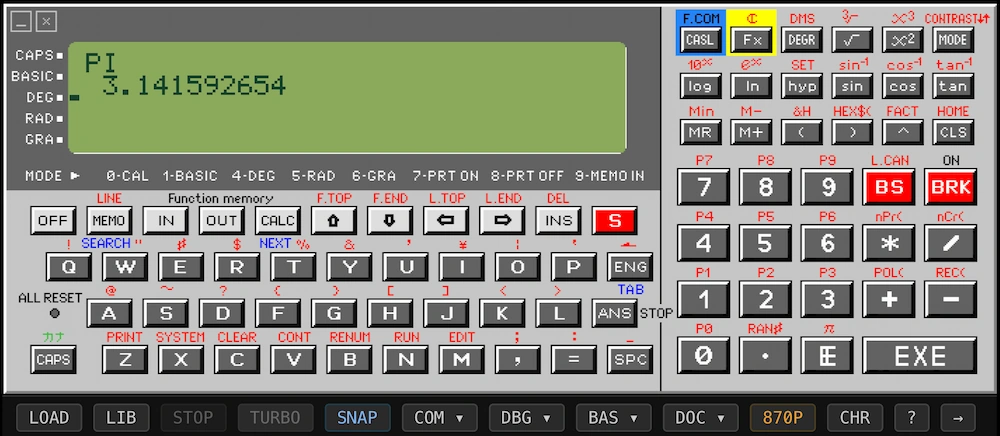
A new emulator project allows users to experience the Casio FX-870P, a popular pocket computer and scientific calculator in Japan during the late 1980s, which saw less traction in Europe and the United States. This device, also known as the VX-4 in Europe, combined programmable computing with advanced scientific calculator functions. The emulator meticulously recreates the original hardware, including its Hitachi HD61700 processor running at approximately 921 kHz, a 96x64 pixel LCD screen, an 83-key keyboard, and an RS-232C serial port, even supporting the optional MD-120 floppy disk drive.
Notably, the emulator offers flexibility by allowing users to switch between the Japanese FX-870P firmware and the English VX-4 version. It also boasts features far beyond the original machine's capabilities, such as running programs 50 times faster, saving system states, and emulating floppy disks. The emulator includes a sophisticated BASIC editor with syntax coloring, real-time memory listings, an example library, a character graphics editor, a debugger, and serial communication monitoring. It even features a compiler that translates BASIC programs into the HD61700's machine code.
The original FX-870P was designed for Japanese engineering students and supported multiple programming languages, including a robust BASIC, C (compiled to bytecode), and CASL for learning assembly language. Its four-line display significantly improved program writing compared to earlier single-line models. The device could connect to peripherals like printers, cassette recorders, floppy drives, and PCs via its serial port, showcasing its versatility for its time.
This project highlights the enduring appeal of specialized computing devices from the pre-smartphone era, particularly those that fostered deep engagement with programming and engineering concepts. The emulator's advanced features, such as a machine code compiler and debugger, underscore the significant progress in software development tools over the past few decades. While the original FX-870P served a niche educational and professional market, its revival through emulation speaks to a broader trend of retrocomputing and a desire to understand foundational computing principles. This initiative offers a valuable educational resource, allowing current and future engineers to explore the design trade-offs and programming paradigms of the past, potentially informing contemporary approaches to resource-constrained computing and embedded systems design.
AI-generated to prompt reflection — not editorial opinion, not advice, not a statement of fact. How this works.