Castlemap: Interactive Atlas Features 6,412 Castles Worldwide, Ranked by Wikipedia Popularity
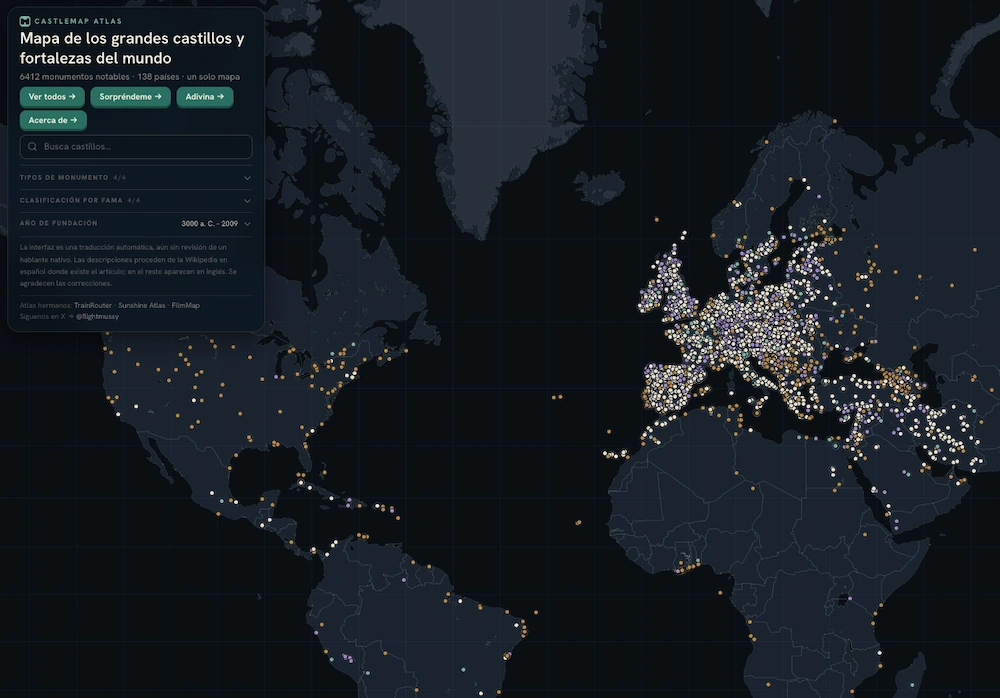
A new interactive map, dubbed Castlemap, has been launched, cataloging 6,412 castles, fortresses, palaces, and ruins from 138 countries. This digital atlas provides geolocated information, historical data, photographs, and links to Wikidata and Wikimedia Commons for each entry. Users can explore the map by zooming and clicking, or utilize extensive lists and filters to sort monuments by country, age, category, or a unique popularity ranking. This ranking is derived from Wikipedia data, combining the number of edits related to a monument and the visit count to its English Wikipedia article, each with equal weighting. Based on this metric, the ancient Iberian settlement of Numancia in Soria, Spain, claims the top spot, followed by Seville's Torre del Oro and Lugo's Roman Walls. Germany leads in the number of castles with 450, narrowly ahead of Spain (433) and France (351). Luxembourg boasts the highest density of significant castles per capita globally. Europe accounts for 73% of the monuments featured. The 13th century was the peak period for castle construction, with nearly half (46%) of all monuments in the atlas built between 1000 and 1500 AD. The oldest fortified site included is Aniba in Nubia, Egypt, dating back to approximately 3000 BC. The project encourages community contributions, allowing data to be downloaded under a free CC0 license and improved by adding information to Wikidata.
Castlemap leverages open-source data from Wikipedia and Wikidata to create a comprehensive, publicly accessible atlas of global fortifications. This initiative highlights the power of collaborative data platforms in democratizing historical and cultural information. The ranking system, based on Wikipedia engagement, implicitly reflects not only historical significance but also contemporary public interest and digital accessibility. While Europe dominates the dataset, likely due to historical factors and greater digital contribution from the region, the inclusion of sites like Numancia and Aniba demonstrates a broad geographical scope. The project's open data and contribution model offer a scalable framework for future cultural heritage mapping, potentially fostering greater engagement with historical sites worldwide by making their digital presence more discoverable and interactive.
AI-generated to prompt reflection — not editorial opinion, not advice, not a statement of fact. How this works.
