Catalan President Defends Government Performance Amidst PISA Report Disappointment
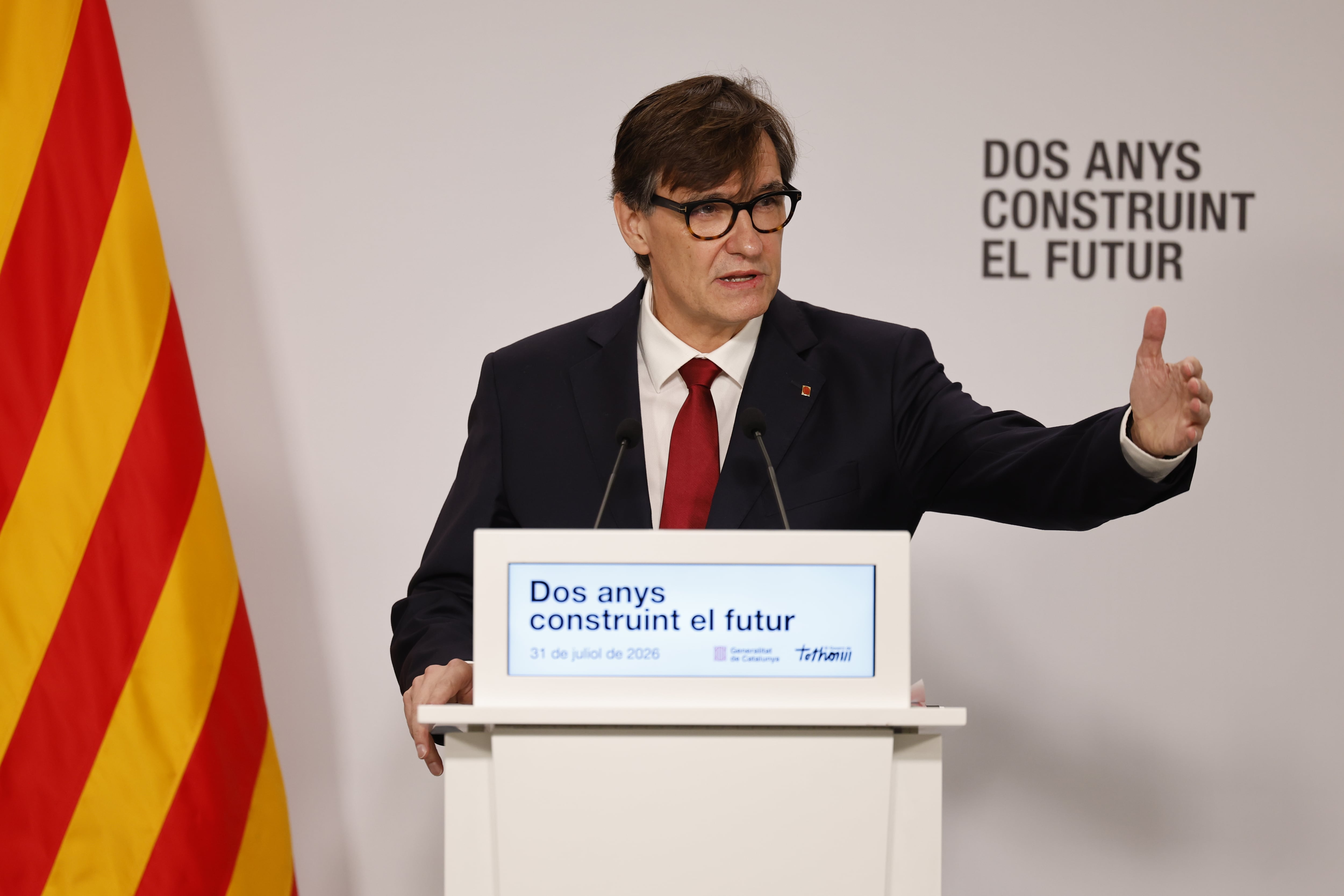
Catalan President Salvador Illa has defended the progress of Catalonia and its regional government, despite the disappointing results of the latest PISA report. Illa stated that his primary objective is the approval of a new funding model for the region. He urged communities governed by the Popular Party (PP) to support this initiative, drawing a parallel with the actions taken by the Canary Islands. The president's remarks aim to reassure the public about the government's effectiveness and focus on key policy objectives, even when faced with setbacks in educational assessments. The PISA report, which evaluates educational systems worldwide, revealed a decline in performance for Catalan students, a finding that has prompted significant discussion about educational policies and their impact. Illa's defense suggests a strategic effort to shift focus towards economic and fiscal matters, highlighting the importance of the funding model for regional development. The call for support from PP-led communities indicates a broader political strategy to build consensus and secure necessary backing for his administration's fiscal agenda. This approach underscores the complex interplay between educational outcomes and broader governance priorities in Spain's autonomous communities.
The Catalan government's focus on securing a new funding model, while acknowledging the PISA report's findings, highlights a common governance challenge: balancing immediate performance metrics with long-term structural reforms. The PISA results, while concerning for educational stakeholders, may be viewed by the administration as a symptom of broader resource allocation issues, thus justifying the emphasis on fiscal policy. The appeal to PP-governed communities suggests an understanding of inter-regional political dynamics and a strategic attempt to forge cross-party alliances on fiscal matters. This approach could be interpreted as a pragmatic response to the limitations of regional autonomy in addressing complex educational outcomes, framing the funding model as a prerequisite for future improvements. The situation underscores the persistent tension between national educational standards and regional fiscal autonomy, a dynamic likely to intensify as AI-driven economic shifts demand more adaptable and equitably resourced public services.
AI-generated to prompt reflection — not editorial opinion, not advice, not a statement of fact. How this works.