Ceará Achieves 100% of Planned Military Police Staffing, Unique in Brazil
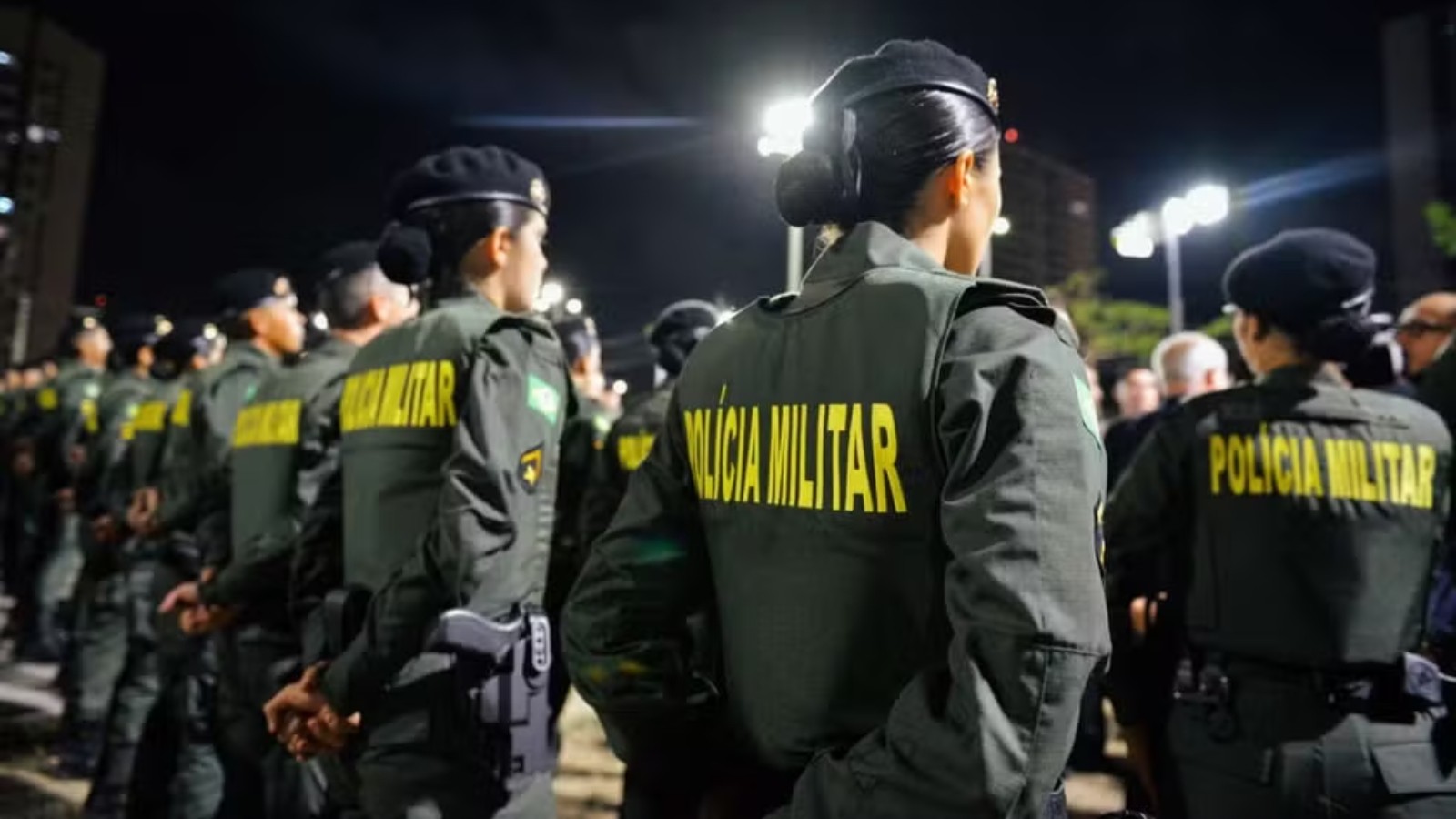
Ceará has become the only Brazilian state to meet 100% of its planned military police staffing, according to the latest "Raio-X das Forças de Segurança Pública do Brasil" report by the Brazilian Public Security Forum. The state's planned military police force was 23,703 officers, but Ceará exceeded this by reaching 23,793. In contrast, Tocantins is significantly understaffed, with only 34.9% of its planned military police force in place. Sergipe and Espírito Santo follow Ceará in staffing levels, at 82.4% and 81.7% respectively. The report also details Ceará's staffing for other agencies: 4,392 out of 5,485 planned for the Civil Police, and 3,479 officers for the Penal Police. The overall active duty security forces in Brazil total 818,521 professionals across ten federal, state, and municipal corporations. The report highlights that the criteria for determining police force sizes are often fragile, primarily based on workload rather than comprehensive analysis. It also notes a moderate growth in security forces nationwide, with the Military Police remaining the largest contingent. However, the Penal Police saw a 3% reduction in staff, which is concerning given the rising prison population and strain on the correctional system. The report also raises concerns about the unchecked growth of Municipal Guards, which often mirror military police structures without equivalent oversight, and calls for a discussion on their role in public security.
This report highlights a significant achievement in Ceará's public security management by reaching its full military police staffing target, a feat not matched by other Brazilian states. This success, however, occurs within a broader context where the methodologies for determining optimal police force sizes are questioned for their fragility and reliance on workload metrics. The report implicitly points to systemic issues in public security resource allocation across Brazil, where some states overachieve targets while others lag considerably. Furthermore, the reduction in Penal Police staffing, juxtaposed with an increasing inmate population, signals a potential future strain on Brazil's correctional infrastructure. The critique of Municipal Guards' unregulated expansion suggests a need for clearer governance frameworks to ensure accountability and prevent the duplication of roles without adequate supervision, which could lead to inefficiencies and potential conflicts in public safety strategies over the next decade.
AI-generated to prompt reflection — not editorial opinion, not advice, not a statement of fact. How this works.
