Ceará Police Destroy Marijuana Plantation After Anonymous Tip
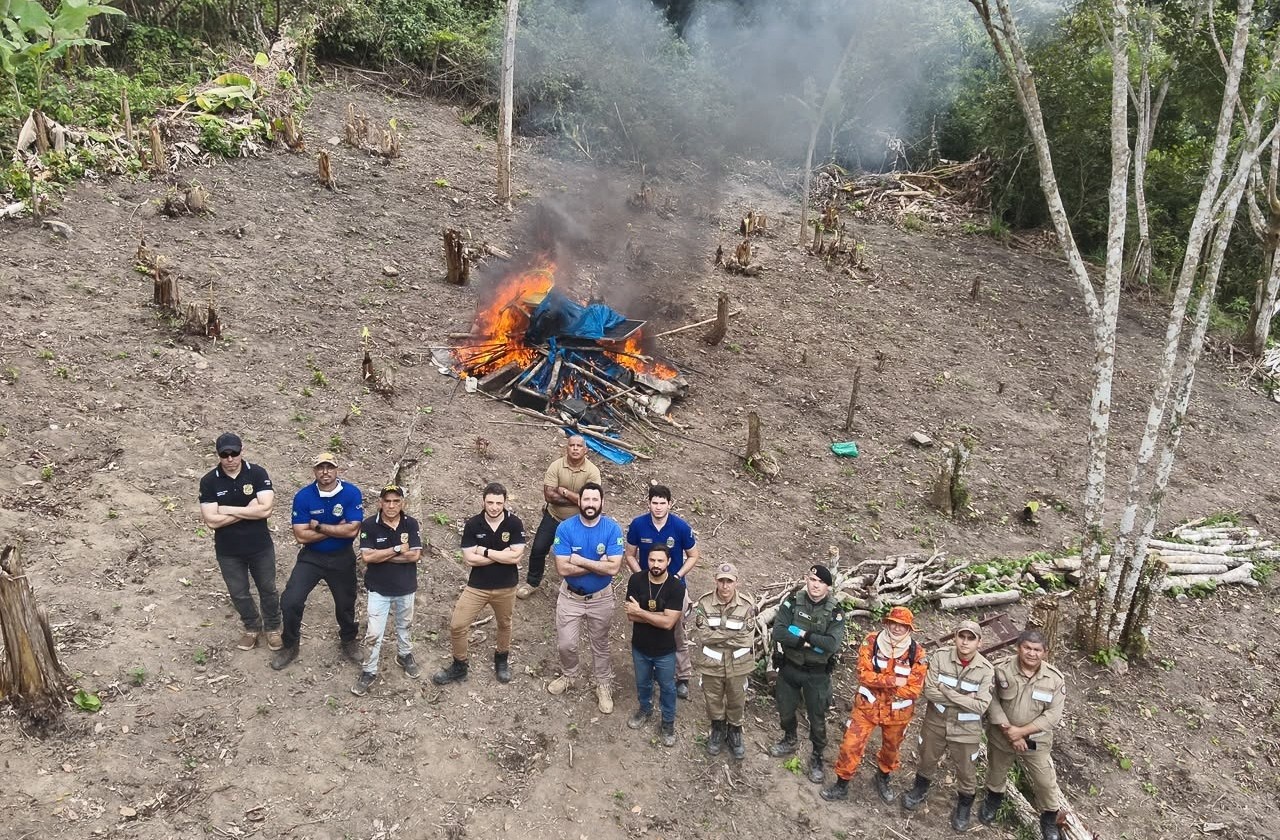
Civil Police in Ceará, Brazil, destroyed and incinerated a marijuana plantation on Thursday, May 9th. The discovery was made in a roughly 600-square-meter area in the municipality of Redenção, following an anonymous tip received on Wednesday, May 8th. Authorities have not yet located or arrested those responsible for the cultivation. The owner of the land has been identified, but their name has not been released by the Secretariat of Public Security and Social Defense of Ceará (SSPDS). The operation received support from the Military Police, Fire Department, and the Forensic Science of the State of Ceará (Pefoce). In a separate incident in Acopiara, also in Ceará, a plantation of 290,000 marijuana plants became a subject of investigation and political controversy. Federal Deputy André Fernandes alleged that police had abandoned the site without incinerating the drugs, contrary to law. The Civil Police had previously released footage of tractors destroying and incinerating the plants. Governor Elmano de Freitas visited the farm and stated the plantation would be destroyed and the agents' conduct investigated. Consequently, Civil Police delegates Vicente de Paula Rodrigues and Marcos Sandro Nazaré de Lira were removed from their leadership positions pending an investigation into their conduct, though they remain police officers.
The destruction of illicit drug cultivation sites is a standard law enforcement procedure. The differing responses and subsequent investigations in Redenção and Acopiara highlight potential challenges in operational execution and oversight within state security apparatuses. Examining the timeline of events, communication protocols, and adherence to destruction mandates in such cases can reveal systemic vulnerabilities. Future efforts might benefit from enhanced inter-agency coordination and clearer directives to ensure consistent and transparent handling of discovered contraband, thereby mitigating opportunities for political contention and maintaining public trust in law enforcement efficacy.
AI-generated to prompt reflection — not editorial opinion, not advice, not a statement of fact. How this works.