CENTCOM Commander Convinced Trump to Halt Iran Strikes with Key Arguments
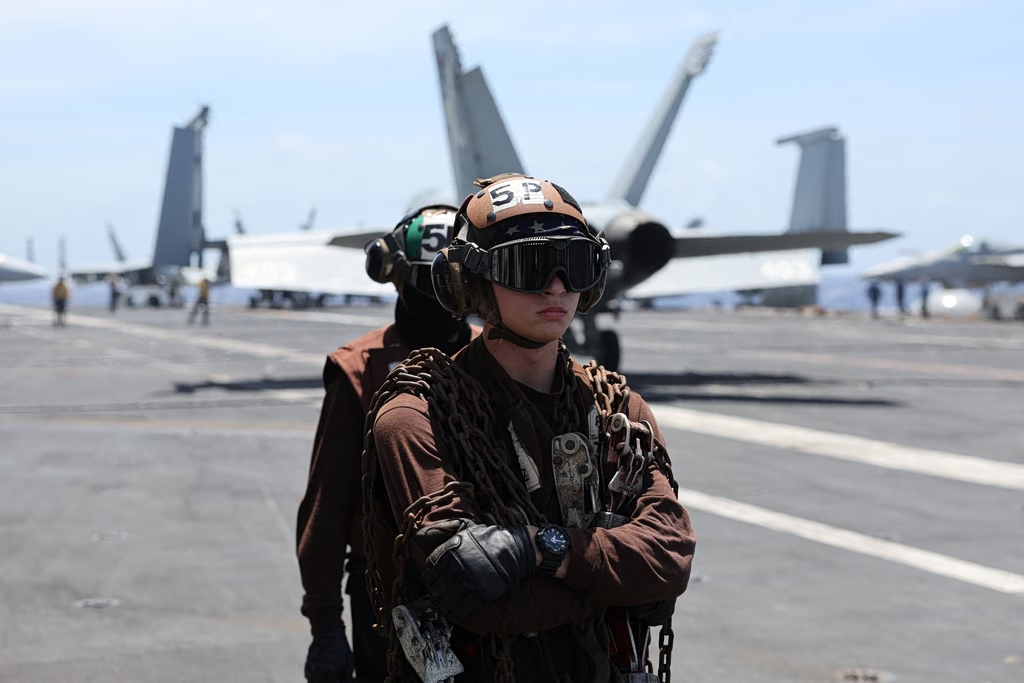
Admiral Brad Cooper, the commander of U.S. Central Command (CENTCOM), presented compelling arguments to then-President Donald Trump that ultimately persuaded him to cease further attacks against Iran. The specific details of Cooper's persuasive strategy were revealed through exclusive reporting by Axios. The commander's intervention reportedly came at a critical juncture, aiming to de-escalate tensions and prevent a broader conflict. Cooper's strategic insights likely focused on the potential repercussions and long-term consequences of escalating military action. His arguments were designed to highlight the risks associated with such strikes, potentially including regional instability and unintended diplomatic fallout. The decision to halt further attacks suggests a successful appeal to Trump's decision-making process, emphasizing prudence over immediate retaliatory measures. This event underscores the influence of military leadership in shaping foreign policy decisions, particularly in high-stakes geopolitical situations. The commander's ability to articulate a clear and convincing rationale was instrumental in altering the course of U.S. policy towards Iran at that moment.
The reported intervention by Admiral Brad Cooper to dissuade then-President Trump from further strikes on Iran highlights the critical role of military advisors in shaping presidential decisions during periods of heightened geopolitical tension. The analysis suggests that Cooper likely presented a strategic assessment emphasizing the potential for unintended escalation, regional destabilization, and the adverse impact on diplomatic objectives. This scenario illustrates the inherent tension between immediate punitive responses and the long-term strategic calculus required in foreign policy. In the context of the evolving global landscape, such decisions are increasingly influenced by the potential for asymmetric warfare, cyber-conflict, and the complex web of international alliances. The effectiveness of military counsel in navigating these complexities, particularly in the face of potentially impulsive decision-making, remains a crucial element of national security governance. Future administrations will likely continue to grapple with balancing swift action against the imperative for measured, strategic engagement in volatile regions.
AI-generated to prompt reflection — not editorial opinion, not advice, not a statement of fact. How this works.