Chenab River Swells Dramatically After Heavy Rains in Indian-Administered Kashmir
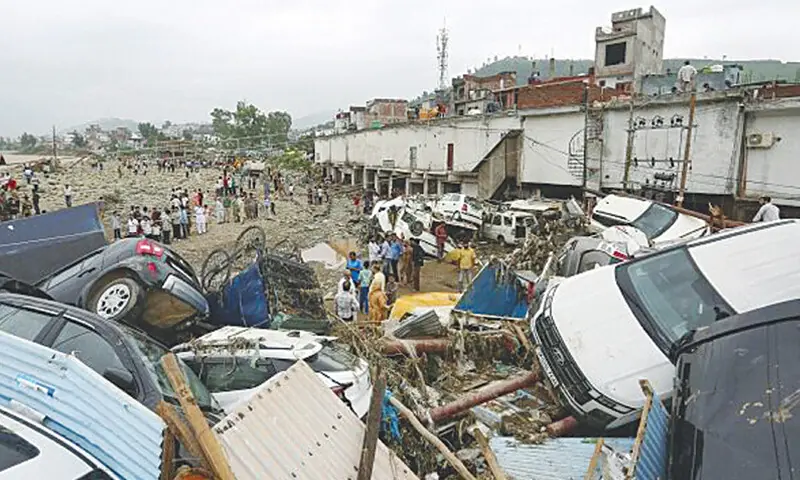
Torrential rains in India-occupied Kashmir have caused the Chenab River's flow to surge to nearly 180,000 cusecs, leading to a medium flood category, according to Pakistan's Flood Forecasting Division (FFD). The FFD has warned of potential low- to medium-level flooding in the Chenab and Ravi rivers over the next 24 hours. This surge in water levels is attributed to heavy rainfall in the region, with an official from the Punjab Irrigation Department noting an unexpected, massive volume of water received from India. Meanwhile, separate incidents linked to heavy rainfall have caused fatalities. In Azad Jammu and Kashmir's Kotli district, a woman and her two children, identified as Nasreen Akhtar (40) and her children Afza Shafiq (14) and Ayan Shafiq (12), were killed when a landslide buried their house on Sunday morning. Her husband and two other children sustained injuries and are in stable condition. In India-occupied Jammu and Kashmir, at least 11 people have died and seven are missing due to flash floods and landslides, with the Surankote area being particularly affected. Rescue operations are ongoing, and several vehicles have been swept away or submerged. The FFD anticipates further increases in river flows due to an approaching westerly wave and a strong monsoon system expected between July 20 and 24, potentially leading to high flooding in major rivers like the Chenab and Jhelum, as well as hill torrents and urban flooding in various cities across Pakistan.
The event highlights the transboundary nature of water resource management and the critical importance of timely and accurate information sharing between nations, particularly concerning shared river systems. The unexpected surge in the Chenab River's flow, coupled with the reported lack of prior notification from India, underscores the potential risks posed by climate-induced extreme weather events when cross-border communication protocols are insufficient. This situation emphasizes the need for robust international frameworks and technological systems to monitor and forecast hydrological changes, ensuring that downstream communities are adequately prepared for potential floods. The tragic loss of life in both regions due to landslides and flash floods also points to ongoing vulnerabilities in infrastructure and disaster preparedness in flood-prone areas, necessitating sustained investment in early warning systems and resilient housing.
AI-generated to prompt reflection — not editorial opinion, not advice, not a statement of fact. How this works.