Chicago's 'Corpse Flower' Blooms, Releasing Infamous 'Death Smell'
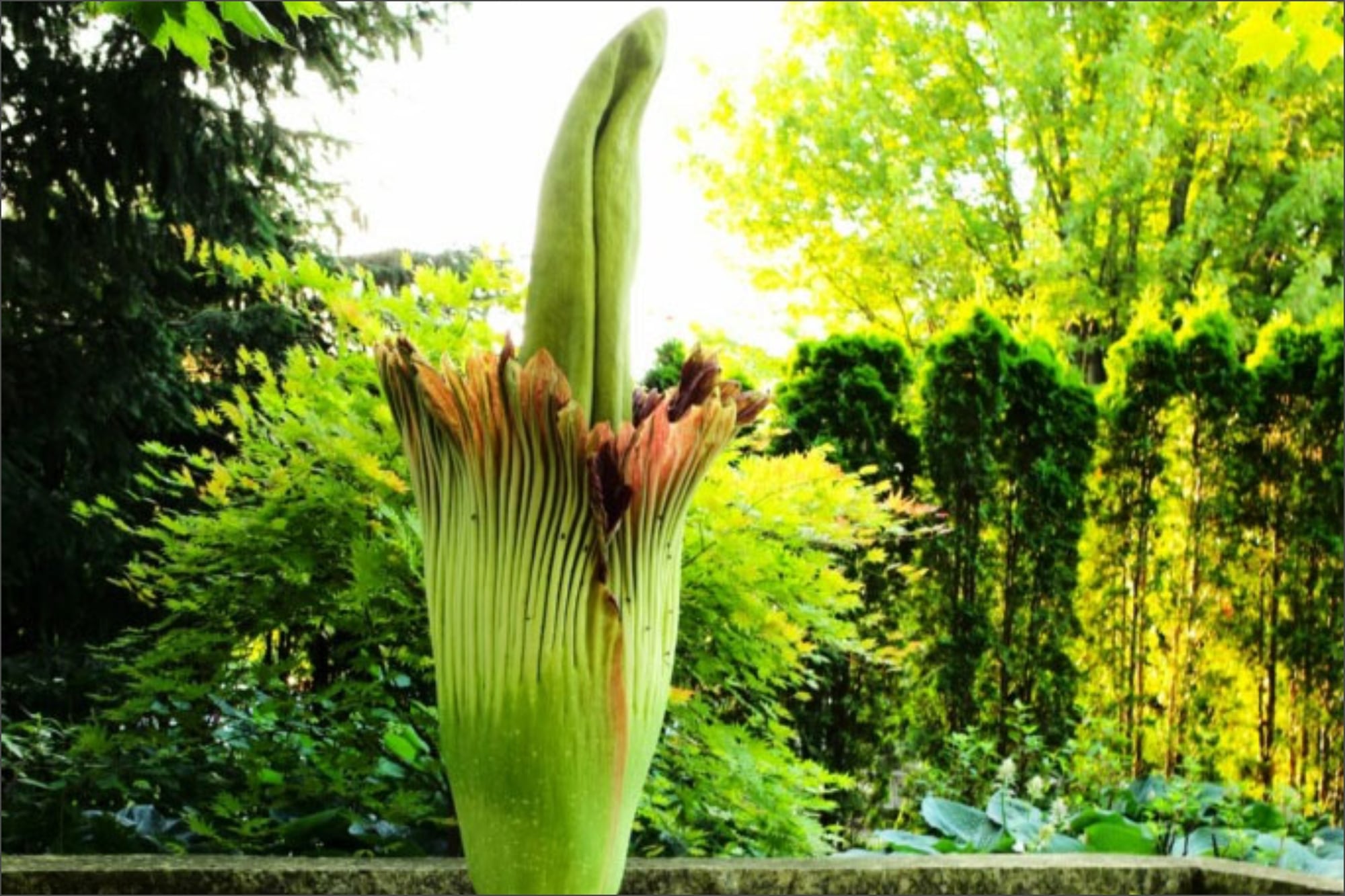
The Amorphophallus titanum, commonly known as the 'corpse flower,' has bloomed in Chicago for the first time in several years. This rare event, nicknamed 'Alice,' is characterized by its exceptionally short blooming period, lasting only 24 to 36 hours. During its bloom, the plant emits a powerful and distinct odor, often described as smelling like decaying flesh. This pungent scent is a natural mechanism to attract pollinators, such as flies and carrion beetles, which are drawn to the smell of decomposition. The corpse flower is native to the rainforests of Sumatra, Indonesia, making its bloom in a major U.S. city a significant botanical occurrence. These plants are notoriously difficult to cultivate and even more challenging to get to bloom, often requiring many years of dedicated care. The rarity of its flowering cycle contributes to the excitement and public interest surrounding Alice's current bloom in Chicago.
The blooming of the 'corpse flower' highlights nature's complex reproductive strategies, utilizing olfactory mimicry to ensure pollination. From a systems perspective, the plant's extreme measures underscore the evolutionary pressures in its native habitat. In an urban setting like Chicago, this event serves as an educational opportunity, demonstrating biological diversity and the intricate relationships between organisms and their environment. The rarity of such blooms also emphasizes the importance of conservation efforts for species facing habitat challenges, prompting reflection on how botanical institutions can foster and preserve these unique specimens for future generations.
AI-generated to prompt reflection — not editorial opinion, not advice, not a statement of fact. How this works.