Chief Justice Criticizes Media for Irresponsible Reporting on Court Proceedings
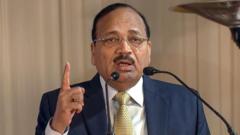
India's Chief Justice has issued a clarification regarding media reports that misquoted him. He stated that the reporting was irresponsible and careless, particularly concerning a statement where he allegedly said, 'Don't waste time.' The Chief Justice emphasized that no such petition or case that would warrant such a comment had been filed before the court. He clarified that the media's portrayal of the situation was inaccurate and did not reflect the actual proceedings or the context of any legal matter. This statement aims to correct the public record and address the dissemination of potentially misleading information by news outlets. The Chief Justice's remarks highlight the importance of accurate and responsible journalism when covering judicial matters. He stressed that the media's failure to verify facts led to the spread of misinformation. The clarification serves as a reminder to journalists to maintain a high standard of diligence and accuracy in their reporting, especially concerning sensitive legal issues.
The Chief Justice's public statement addresses a potential disconnect between judicial proceedings and media representation. This situation underscores the critical role of responsible journalism in maintaining public trust in the judiciary. In an era of rapid information dissemination, the imperative for media outlets to rigorously verify facts and contextualize statements becomes paramount. The Chief Justice's critique points to the systemic challenge of ensuring accuracy in reporting, particularly when dealing with complex legal matters. This incident may prompt a broader discussion on journalistic ethics and accountability within the news industry, encouraging a focus on factual reporting over sensationalism to uphold the integrity of both the media and the judicial system. Future media practices might evolve to incorporate more robust fact-checking mechanisms and a deeper understanding of legal nuances.
AI-generated to prompt reflection — not editorial opinion, not advice, not a statement of fact. How this works.