Chief Whip Denies 'Friendly Games' in Parliament, Calls for Constructive Opposition
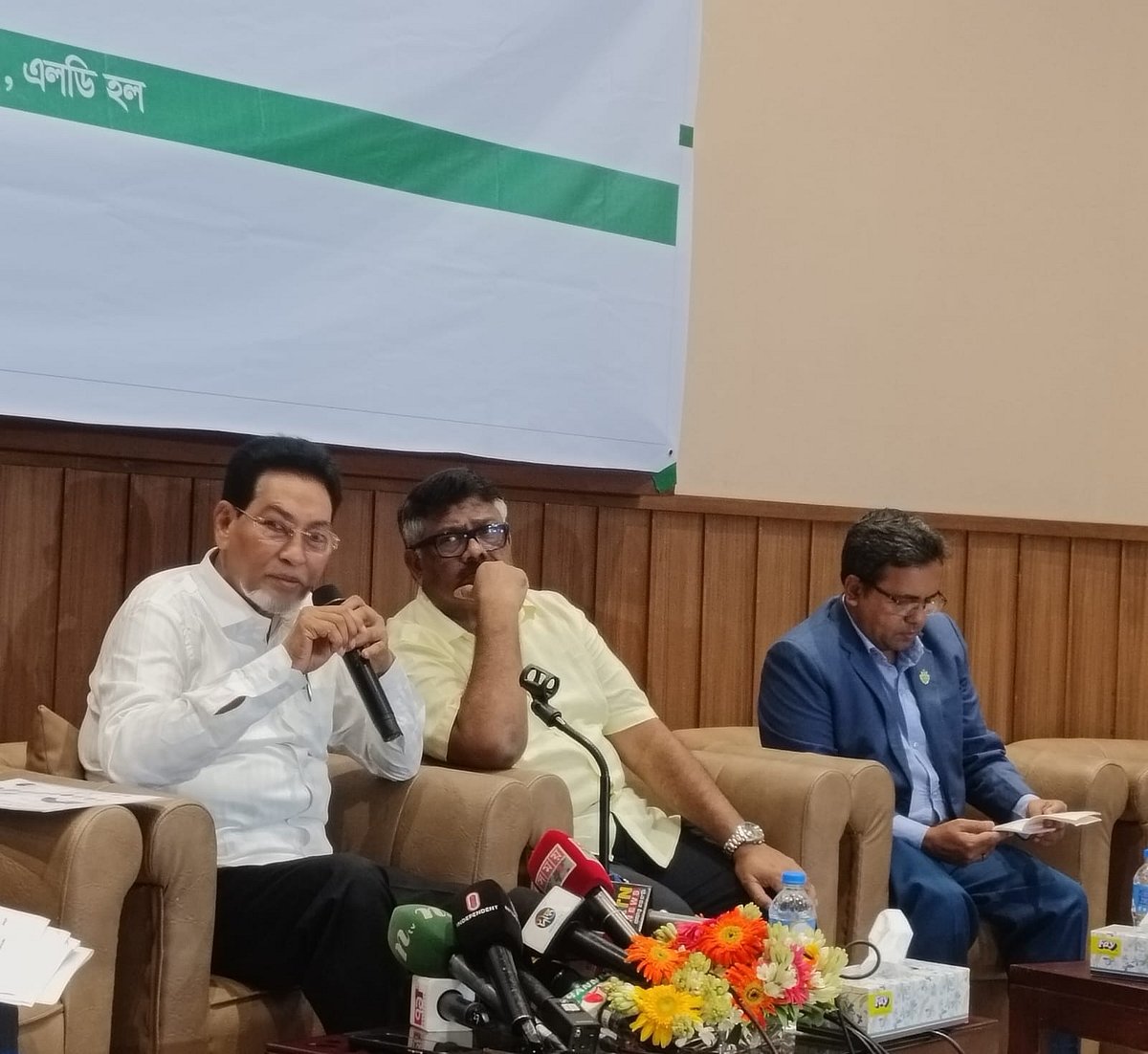
Bangladesh's Chief Whip, Nurul Islam, has refuted claims of any 'games' or 'friendly matches' occurring within the national parliament. Responding to a journalist's question at a press conference on Thursday, he stated that the government desires an opposition that offers cooperation on logical matters while also providing constructive criticism when necessary. He clarified that while figures like Messi and Ronaldo engage in friendly games in football, the political landscape in Bangladesh involves Dr. Shofiqur Rahman in the opposition and Tareq Rahman in the government, emphasizing the absence of any playful or pre-arranged political contests. Islam asserted that citizens want both the ruling and opposition parties to collaborate on problem-solving. He expressed a desire for the opposition to support genuine government initiatives and critique those that are not, thereby aiding in government correction. The Chief Whip also highlighted that the role of an opposition party in a democracy is not solely to oppose but also to prepare for potential future governance. He believes both sides should work together to protect national independence, sovereignty, and democracy. Praising the current budget as the most people-centric and life-relevant since independence, he noted the absence of price hikes or public protests following its announcement and passage. Regarding potential constitutional amendments, he indicated that discussions could occur outside parliament with various parties, while the actual amendment process would take place within the legislative body. He also addressed concerns about the late distribution of bills, acknowledging that some, like the three or four presented in the current session, were delayed but assured that sufficient time is allocated for members to read, discuss, and analyze them before passage. Finally, he stated he had no information about a government member's absence due to feeling 'insulted' but pledged to investigate if provided with details, ensuring no one, regardless of party affiliation, feels disrespected.
The Chief Whip's remarks frame parliamentary dynamics as a pursuit of substantive policy, contrasting it with a 'friendly game' analogy used by an opposition member. This framing seeks to legitimize the government's agenda and reframe opposition as potentially disruptive if not aligned with 'genuine' national interests. The analysis suggests a tension between the ideal of a collaborative opposition that supports the government on merits and the reality of partisan politics, where opposition often serves as a check through critical scrutiny. The Chief Whip's emphasis on collaboration for national interests, particularly concerning sovereignty and democracy, positions the government as the primary custodian of these values. However, the underlying incentive structure for political actors may prioritize distinct party platforms and electoral competition over broad consensus, potentially creating a divergence between the espoused ideal of unity and the practicalities of political engagement. Future parliamentary sessions will reveal whether this call for constructive engagement translates into sustained cross-party cooperation or remains a rhetorical aspiration within a competitive political environment.
AI-generated to prompt reflection — not editorial opinion, not advice, not a statement of fact. How this works.