Child, 3, rides standing on motorcycle with parents in Brazil
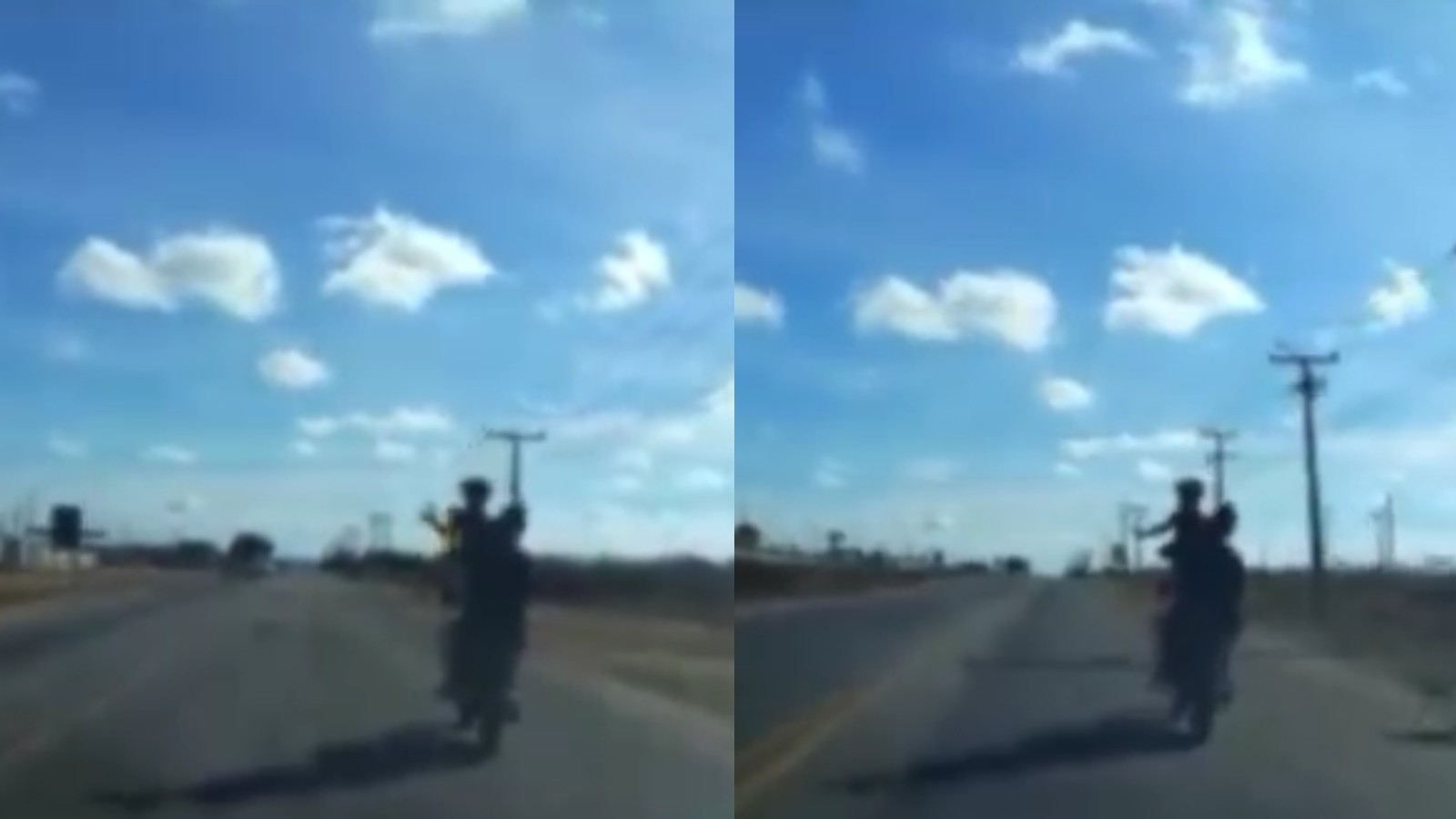
A video captured a disturbing incident in São Raimundo Nonato, located in the Southeast region of Piauí, Brazil, where a three-year-old child was seen riding standing up on a motorcycle. The footage, recorded by a car passenger on Tuesday morning (28th), shows the child positioned between the driver and a passenger on the back of the bike. None of the occupants were wearing helmets, and the motorcycle lacked an identification plate, though the rider appeared to be traveling at a low speed. The motorcycle's driver, a construction helper who chose to remain anonymous, explained that the bike is the family's sole mode of transportation. He stated he is in the process of acquiring safety equipment, such as helmets and appropriate clothing, for future journeys, emphasizing his lack of alternatives. He expressed, "The only means of transport I have is the motorcycle, and I have no way to leave my son. I am forced to take him with me and my wife like this due to a lack of options." Fernando Aragão, director of traffic operations for the Piauí Public Security Secretariat (SSP-PI), condemned the practice as "extremely dangerous" and in violation of the Brazilian Traffic Code (CTB). The CTB prohibits transporting children under 10 years old on motorcycles unless they can ensure their own safety, a condition typically interpreted subjectively. Violations can lead to fines, seven points on the driver's license, license suspension, and vehicle impoundment. Aragão reiterated, "The correct way is that children under 10 years old should never be transported on motorcycles."
The incident highlights a critical intersection of socioeconomic constraints and traffic safety regulations. While the driver's actions are undeniably dangerous and illegal under Brazilian law, his statement points to a lack of viable transportation alternatives as a primary driver. This situation underscores a systemic challenge where poverty and limited access to resources can compel individuals into high-risk behaviors to meet basic needs, such as commuting. Future policy considerations might explore integrated solutions that address both enforcement and the provision of affordable, safe transportation options for low-income families. The long-term implications involve not only immediate safety risks but also the potential for developing a culture of compliance through accessible alternatives, rather than solely relying on punitive measures.
AI-generated to prompt reflection — not editorial opinion, not advice, not a statement of fact. How this works.