Child Using AI for Summer Homework: Expert Advice on Parental Guidance
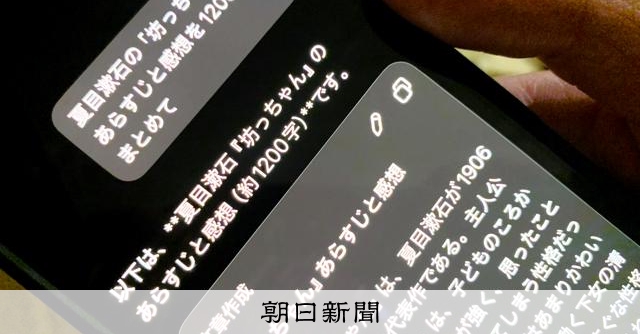
As summer vacation concludes, a growing concern among educators and parents revolves around children utilizing artificial intelligence to complete their homework. This trend raises questions about the educational implications and the role of technology in academic development. Experts are now focusing on how parents and guardians can effectively guide their children through this new landscape of AI-assisted learning.
The core issue is not necessarily the use of AI itself, but how it is being employed. While AI can be a powerful tool for research, understanding complex concepts, and generating ideas, its misuse can hinder the development of critical thinking and problem-solving skills. Educators emphasize the importance of teaching students to use AI responsibly and ethically, ensuring it serves as a supplement to, rather than a replacement for, their own learning efforts.
Discussions are underway regarding appropriate parental 'check-ins' and conversations. These aim to foster an environment where children feel comfortable discussing their use of AI for schoolwork, while also ensuring they are genuinely engaging with the material. The goal is to strike a balance, leveraging AI's capabilities to enhance learning without compromising the fundamental educational objectives of homework.
AI's integration into academic tasks presents a complex challenge for educational systems and parental oversight. The development of AI tools capable of generating human-like text and completing assignments necessitates a re-evaluation of traditional assessment methods and learning objectives. Rather than solely focusing on preventing AI use, a more productive approach may involve adapting curricula to incorporate AI literacy, teaching students how to critically evaluate AI-generated content, and emphasizing the unique human skills that AI cannot replicate, such as creativity, emotional intelligence, and ethical reasoning. The long-term impact will depend on how effectively educational institutions and families can foster a symbiotic relationship with AI, where it serves as a collaborator in learning rather than a shortcut, preparing students for a future where AI proficiency is a fundamental skill.
AI-generated to prompt reflection — not editorial opinion, not advice, not a statement of fact. How this works.