Children's Jersey Rights Ignored Amidst World Cup Fever
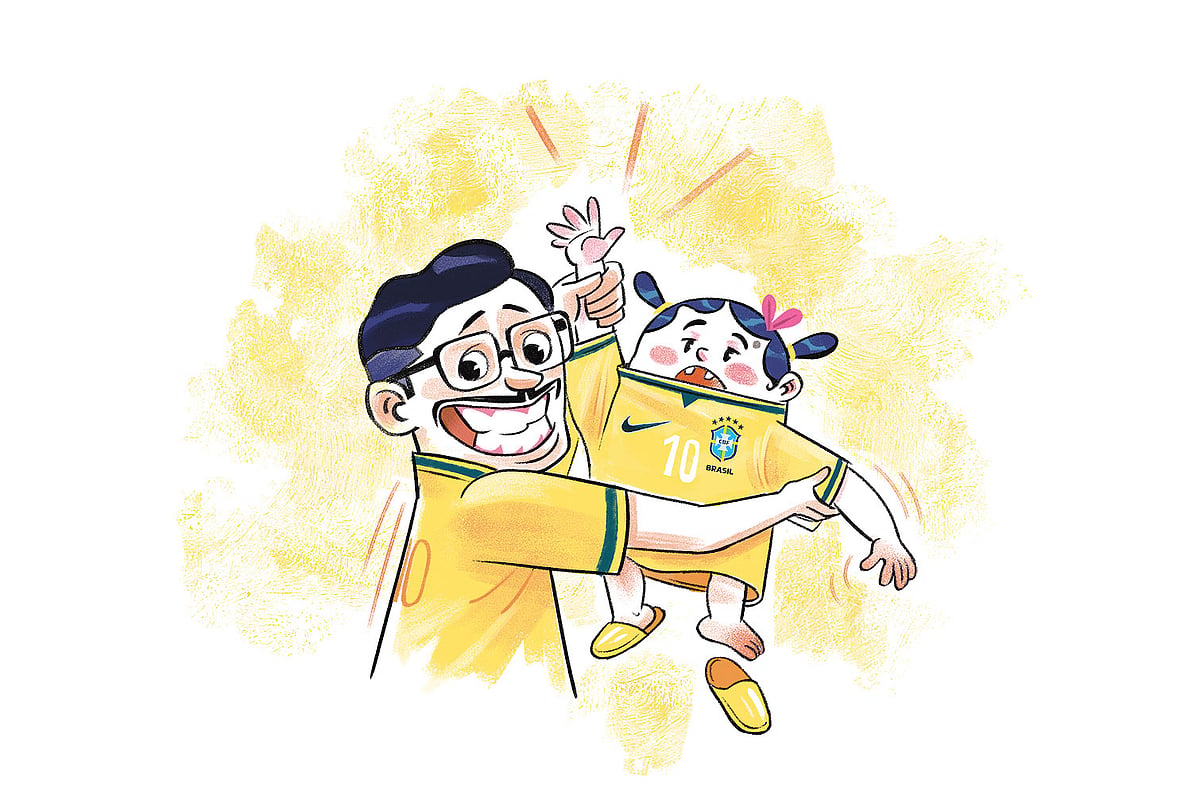
As the World Cup ignites global passion, many are donning their favorite team's jerseys. While wearing a jersey is harmless, the issue arises when children are made to wear them. Young children are being dressed in jerseys of their parents' preferred teams, which the author argues is a violation of the children's right to choose their own jersey. Despite widespread discussions about rights, the author questions why no human rights advocates are speaking out about this infringement on children's jersey rights, lamenting the state of humanity. An example is given of a colleague posting a picture of their infant daughter in a Brazilian jersey, prompting the question of why an unaware child is being forced into supporting a team and having their jersey rights violated. The colleague's justification was that it's a father's duty to guide his child from a young age. This practice of imposing adult preferences through jerseys on children is widespread, with some taking to social media to debate the ethics of influencing children before they can understand, questioning the future of morality. Some commenters suggest that children will naturally choose their preferred team when they understand, implying that forcing a jersey now is ineffective. The article humorously ponders where justice would be sought if children's jersey rights violations were prosecuted, suggesting the formation of a 'Football Court' to handle such issues, alongside adjudicating crimes committed by fans wearing team jerseys.
The intense emotional engagement surrounding major sporting events like the World Cup can lead to the imposition of adult preferences onto children, framed here as a violation of 'jersey rights.' This phenomenon highlights a broader societal dynamic where collective enthusiasm can overshadow individual autonomy, even for those too young to express it. From a developmental psychology perspective, children's identities are still forming, and external pressures to align with specific affiliations, such as sports teams, may influence their developing sense of self and critical thinking. The author's call for a 'Football Court' satirically points to the perceived lack of formal recourse for such social pressures, underscoring the need for greater awareness regarding children's agency and the potential for subtle forms of coercion within family and social structures. Future considerations should involve fostering environments where children can explore their interests freely, rather than having affiliations dictated by parental or societal fervor, aligning with principles of child development and autonomy.
AI-generated to prompt reflection — not editorial opinion, not advice, not a statement of fact. How this works.