Chile Storm: 10 Dead, 100,000 Isolated After Extreme Rainfall
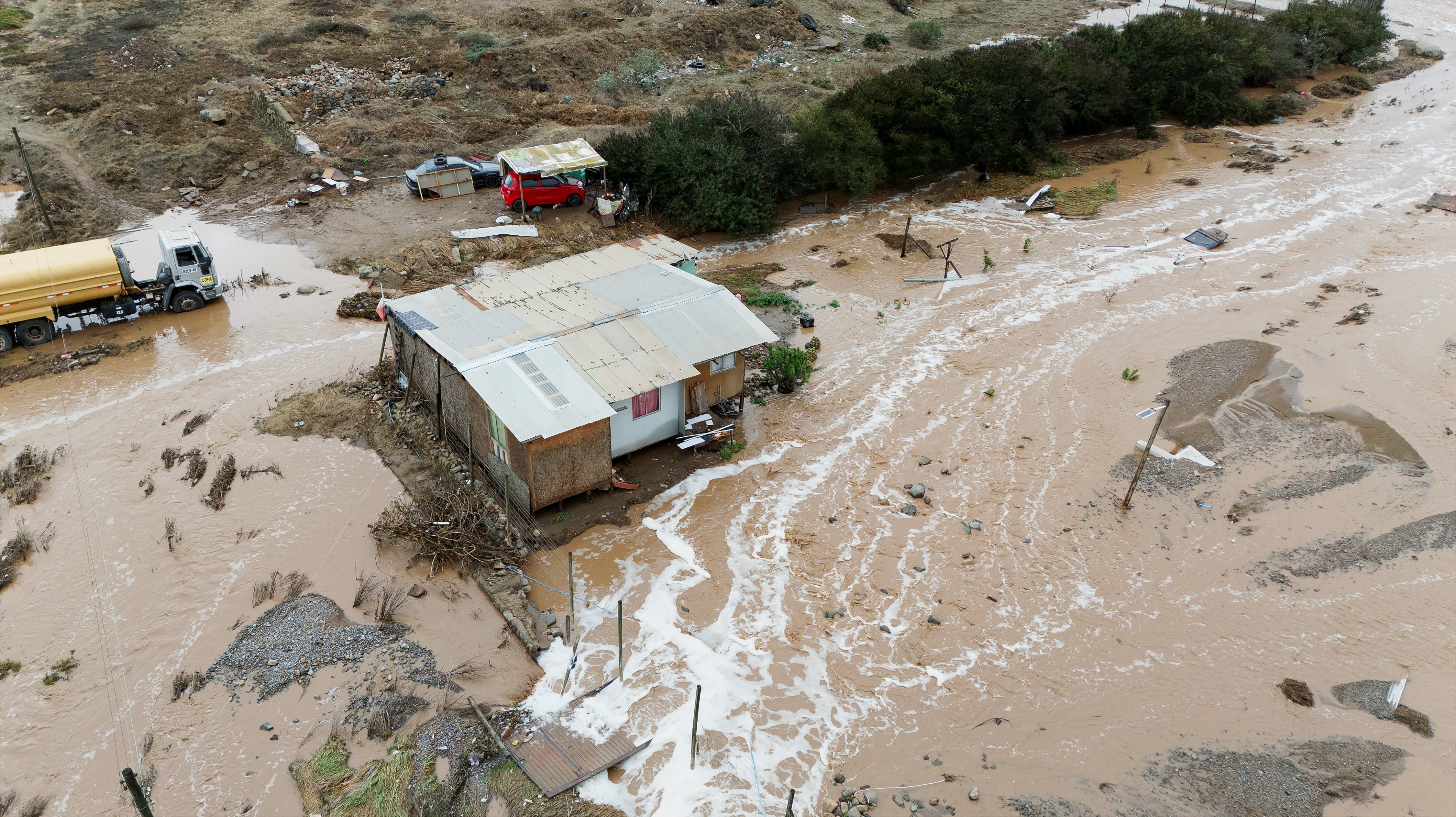
An intense meteorological front has caused severe storms across Chile, resulting in at least 10 fatalities, four disappearances, and 17 injuries, according to a government report released on Monday, June 20th. Over 100,000 people are isolated due to blocked roads, and the government has declared a state of catastrophe, mobilizing the army for rescue operations. The phenomenon, which began on June 15th in the south, is now intensely affecting the desert regions of Coquimbo and Atacama in the north, areas unaccustomed to such extreme rainfall. Rivers have overflowed, leading to road blockages and the isolation of communities. Alicia Cebrián, director of the National Emergency Service (Senapred), confirmed the casualty figures, noting that a previous report had indicated five deaths. The emergency has also resulted in approximately 2,200 homes destroyed or structurally damaged, leaving around 2,400 individuals homeless and over 100,000 people cut off. Cristóbal Juliá, governor of Coquimbo, described neighborhoods filled with mud and flooded homes, with many residents losing their belongings and experiencing distress. He noted that the last comparable heavy rainfall event occurred in 1997, but the current situation is significantly more severe. President José Antonio Kast's declaration of a state of catastrophe allows for the deployment of military personnel, restrictions on movement, and expedited aid delivery. The Vice Minister of the Interior, Máximo Pavez, characterized the event as "abnormal and extreme," with rainfall amounts that would typically occur over a month concentrated into a single hour. The Chilean Directorate of Meteorology indicated that such an extensive and rainy storm has not been seen in two decades. Approximately 150,000 people remain without electricity, and the company Aguas del Valle reported damage to its infrastructure and the evacuation of staff from some facilities. Additionally, strong winds exceeding 100 km/h have led to operational restrictions at dozens of ports nationwide.
This extreme weather event highlights the vulnerability of regions, particularly desert areas, to uncharacteristic and intense meteorological phenomena. The declaration of a state of catastrophe and military mobilization underscore the immediate challenges in disaster response and infrastructure resilience. The event's severity, exceeding historical rainfall records for the region, points to potential shifts in climate patterns, necessitating a long-term strategic focus on adaptation and mitigation measures. Future planning should consider enhanced early warning systems, robust infrastructure design capable of withstanding extreme conditions, and diversified water management strategies to address both drought and flood risks in a changing climate. The economic impact on affected communities and essential services like water and power supply requires sustained recovery efforts and investment in resilient infrastructure.
AI-generated to prompt reflection — not editorial opinion, not advice, not a statement of fact. How this works.