Chilean Government Achieves Legislative Wins by Marginalizing Opposition
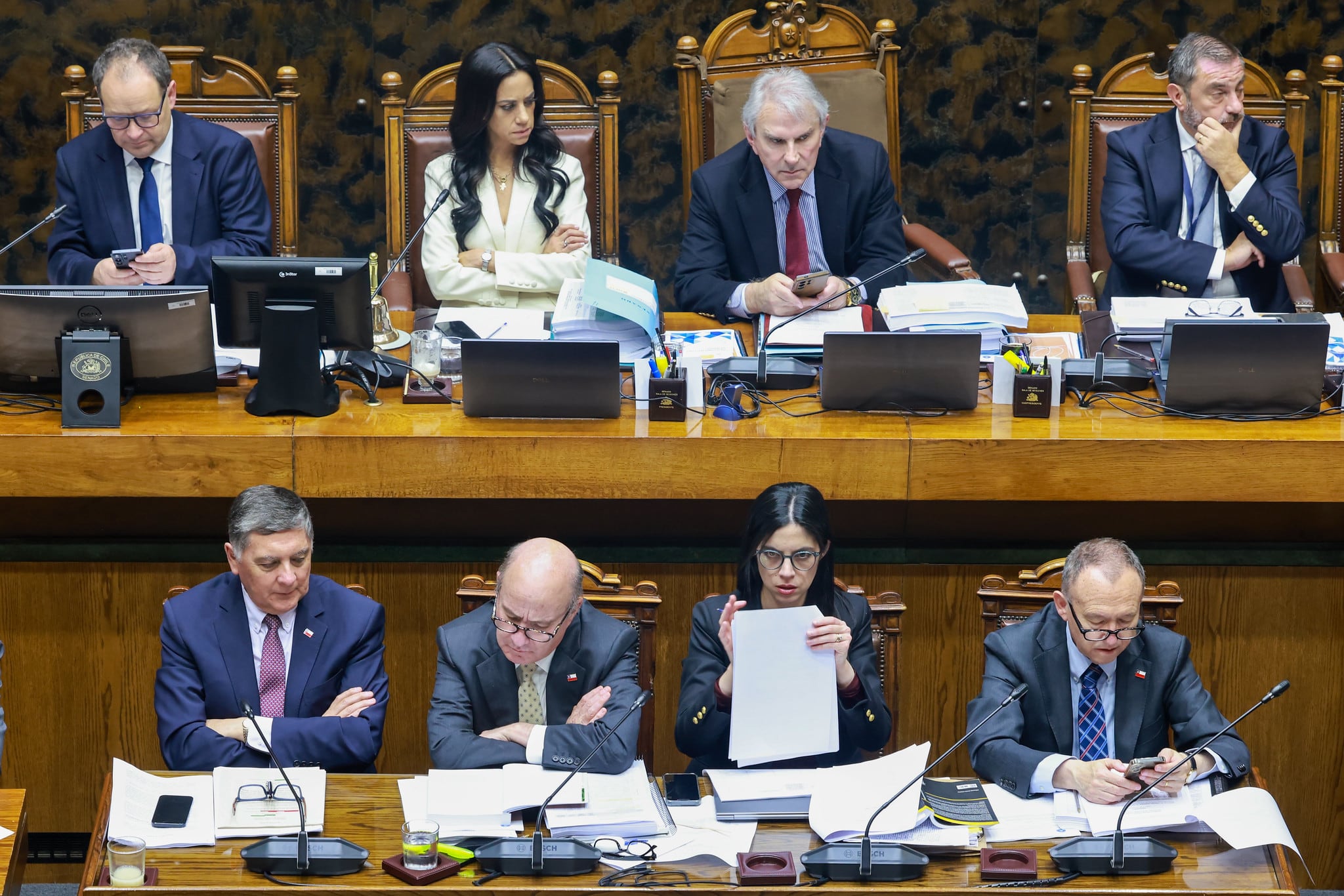
The Chilean Senate approved a significant "megareforma" project last Thursday, marking a considerable victory for the new government triumvirate of Alvarado, García, and Quiroz. Key provisions include a reduction in the first-category tax rate from 27% to 23%, maintaining tax invariability, and eliminating certain contributions. Beyond these fiscal changes, the legislative process revealed a new strategy for the government: advancing legislation without the need for opposition votes. This approach effectively renders the opposition irrelevant.
The government has secured an ally in the Chamber of Deputies with the Partido de la Gente (PDG) and its representative Parisi. In the Senate, the government demonstrated its ability to consolidate its own bloc and attract specific votes by engaging those willing to negotiate rather than obstruct. This contrasts with the opposition's extensive, and ultimately unsuccessful, amendments in the Chamber.
The opposition appears fractured, divided into two main camps. The Communist Party and the Frente Amplio form a bloc ideologically opposed to the current government, viewing themselves as a counterforce to what they term "the far-right." A potential bridge to this group seems unlikely. The situation is more complex within the Socialist Party (PS), the largest opposition party, which struggles to establish a clear direction. Internal divisions were evident in the Senate, with differing approaches represented by Vodanovic's dialogue-oriented stance and Cicardini's more hardline, identity-focused politics. Meanwhile, the Party for Democracy (PPD) shows glimmers of understanding the new political landscape, while the Christian Democratic Party (DC) appears adrift, ceding its traditional centrist space to the PDG.
The government's successful method involves making concessions on minor points, such as phased tax invariability, to secure essential objectives. This strategy prioritizes securing the necessary votes from willing participants over the broad opposition. The author, Rodrigo Arellano, Vicedean of the Faculty of Government at Universidad del Desarrollo, suggests that legislative influence is now measured by a party's willingness to negotiate, not just its seat count. Parties unwilling to adapt to this new reality risk becoming irrelevant throughout the legislative period.
The legislative maneuver described highlights a shift in Chilean politics where the government has successfully bypassed traditional opposition blocs by forming ad-hoc coalitions. This strategy, focused on securing specific votes through targeted concessions, effectively neutralizes the impact of unified opposition, turning parliamentary numbers into a less decisive factor than willingness to negotiate. The analysis suggests that the opposition's current structure, characterized by ideological divides and internal party struggles, hinders its ability to adapt to this new dynamic. Future legislative success in Chile may hinge on a party's capacity for pragmatic negotiation and its ability to identify and leverage shifting alliances, rather than solely relying on ideological purity or large voting blocs. This approach raises questions about the long-term health of democratic deliberation when significant segments of the electorate's representation are systematically sidelined.
AI-generated to prompt reflection — not editorial opinion, not advice, not a statement of fact. How this works.