Chilean Opposition Fractures Amidst Tax Reform Debate
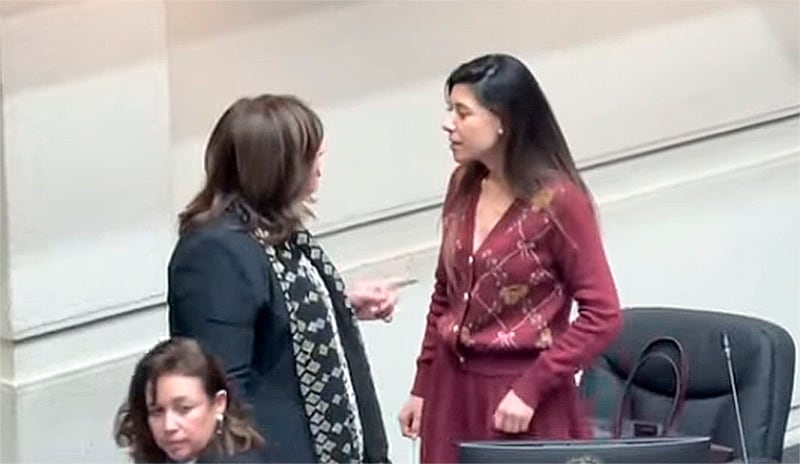
Chile's opposition parties are experiencing significant internal divisions, particularly concerning the government's major tax reform. While Senators Paulina Vodanovic and Daniella Cicardini of the Socialist Party (PS) engaged in a public dispute within the Senate, members of the Party for Democracy (PPD) quietly reached an agreement with Finance Minister Jorge Quiroz. This deal pertains to a key aspect of the tax reform: tax invariability. The PPD's move complicates the opposition's unified stance, especially their earlier consideration of challenging the reform before the Constitutional Court. The week was marked by public disagreements, coordination failures, and private recriminations among center-left and left-wing parties, occurring just four months into President José Antonio Kast's administration. Earlier in the week, PS Senators Vodanovic and Juan Luis Castro, along with PPD Senator Loreto Carvajal, participated in a meeting convened by Senate President Paulina Núñez to discuss the Reconstruction Law with Minister Quiroz. However, the Communist Party (PC), Christian Democratic Party (DC), and the Broad Front (FA) had already withdrawn from these discussions. The divisions became apparent when Social Democratic senators announced their intention to challenge the tax invariability norm at the Constitutional Court, preempting a joint opposition decision. Simultaneously, internal tensions within the PS flared, with Senator Cicardini accusing the party's leader of failing to communicate discussions with the executive branch regarding the tax reform. This internal revolt not only hindered potential rapprochement between the socialists and the government but also highlighted a deep ideological rift within the PS regarding their approach to the current administration. The situation escalated when Vodanovic and Cicardini publicly exchanged sharp words in the Senate chamber. Cicardini had posted a video alleging a "collusion" between the PS president and Minister Quiroz over their reform-related talks, which Vodanovic dismissed as "false and disproportionate." Despite these public spats, the PPD senators' agreement with the government on the Reconstruction Law, which introduces gradualism to tax invariability, reduces the likelihood of the reform being taken to the Constitutional Court on this specific issue. Ultimately, the opposition's profound fragmentation appears to be benefiting the executive branch, which has so far capitalized on these internal conflicts.
The internal discord within Chile's opposition parties, highlighted by public disputes and fragmented negotiations over the government's tax reform, suggests a challenge in forming a cohesive legislative strategy. This fragmentation may stem from differing ideological priorities or strategic disagreements on how to engage with the executive branch, particularly concerning a significant fiscal policy. The PPD's independent agreement with the Finance Ministry on tax invariability, while potentially pragmatic for advancing specific legislation, risks further alienating other opposition factions and undermining collective bargaining power. From a systems perspective, the inability of diverse political groups to reconcile internal differences in the face of a major policy initiative could indicate structural weaknesses in inter-party coordination mechanisms. Looking ahead, the ability of these parties to overcome such divisions will be crucial for their effectiveness in shaping future legislation and providing robust oversight in an era increasingly defined by complex economic and social policy challenges.
AI-generated to prompt reflection — not editorial opinion, not advice, not a statement of fact. How this works.