China Adds Dutch Shipbuilder Royal IHC to Export Control List
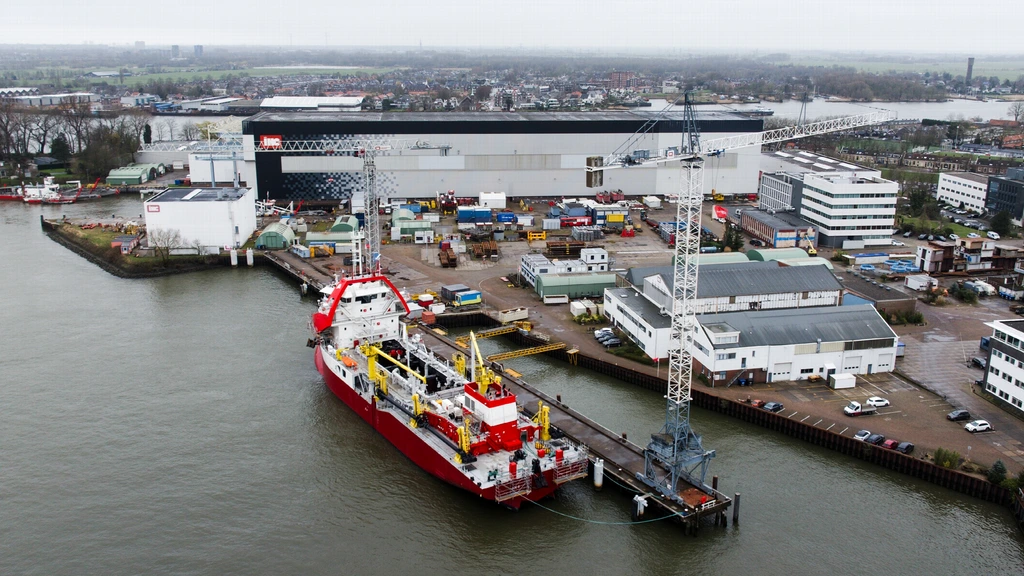
China has placed the Dutch shipbuilding company Royal IHC on its export control list, prohibiting Chinese firms from selling products or technology with dual civilian and military use to the company. This action follows the European Commission's recent publication of its largest-ever sanctions package, which included fourteen Chinese and Hong Kong-based companies for their alleged support of Russia's war against Ukraine.
The Chinese Ministry of Commerce described the European sanctions as "outrageous" and stated that its own measures are necessary to protect national security. Being placed on this list makes it significantly more difficult, or even impossible, for European companies to obtain certain technologies, materials, or components from China, potentially impacting their production, research, and the development of European industries. While China cites national security, such measures are often interpreted as political retaliation.
Besides Royal IHC, thirteen other European companies have been added to the list. These companies operate in sectors including defense, optics, semiconductors, and chemicals. Germany appears to be the most heavily affected, with its defense giant Rheinmetall and two other German firms also on the list, possibly reflecting increased German criticism of China's trade practices. The European Commission is analyzing the impact of these Chinese measures with member states and affected companies. Royal IHC was unavailable for comment.
China's addition of Royal IHC and other European entities to its export control list represents a significant escalation in retaliatory trade measures. This action underscores the increasing weaponization of economic interdependence, where dual-use technologies become leverage points in geopolitical disputes. The move highlights the systemic risk for global supply chains when national security concerns are broadly interpreted to encompass economic and political objectives. European industries, particularly those in strategic sectors like defense and advanced technology, face the challenge of diversifying their sourcing and mitigating potential disruptions. This dynamic suggests a future where technological access is increasingly segmented along geopolitical lines, demanding greater strategic autonomy and resilience from Western economies to navigate evolving international trade relations.
AI-generated to prompt reflection — not editorial opinion, not advice, not a statement of fact. How this works.