China and Cameroon Launch Joint Infrastructure Training Program
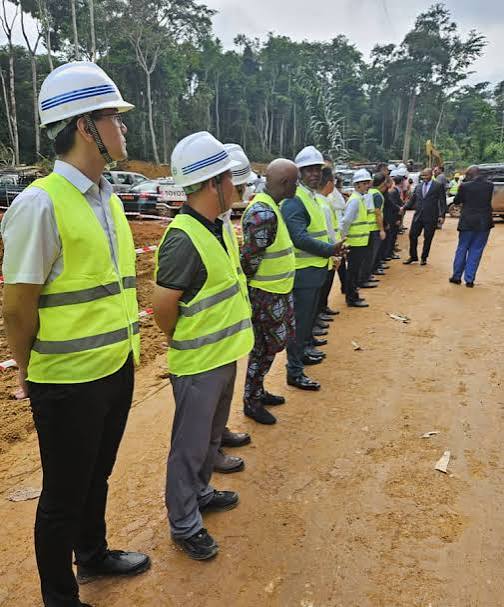
China First Highway Engineering Co. (CFHEC) has initiated a ten-day training program named Seagull Talent in Yaoundé, Cameroon, aimed at enhancing local expertise in public works. The program involves 54 participants, comprising 24 local employees from CFHEC projects and 30 students from the National Advanced School of Public Works (ENSTP). Instruction is delivered by a joint team of Chinese experts and Cameroonian educators, covering theoretical topography, instrument usage, field practice, corporate culture, and drone piloting. Yang Song, CFHEC's General Manager for International Operations, stated the program's goal is to improve local employees' technical and intercultural skills while supporting Cameroon's infrastructure development. Cameroon's Minister of Higher Education, Jacques Fame Ndongo, characterized the initiative as a direct transfer of skills and technology, aligning with the government's aim to professionalize education. Minister Ndongo highlighted that CFHEC is opening its design offices and construction sites to students, contributing to the adaptation of university curricula to global standards, and introducing technologies used in major Chinese projects. The shared objective is to cultivate a highly skilled national workforce capable of designing and managing future large-scale infrastructure projects, which the Minister described as true technical sovereignty. The program is jointly certified by Cameroon's Ministry of Higher Education, CFHEC, and the China Highway and Transportation Society. CFHEC, operating in Cameroon since 1992, reports having completed approximately 132 infrastructure projects and trained over 2,000 local professionals during this period.
This Sino-Cameroonian collaboration on infrastructure training signifies a strategic alignment between China's global infrastructure development initiatives and Cameroon's national goals for technical capacity building. The program's focus on practical skills, technology transfer, and curriculum adaptation suggests a model for developing countries seeking to professionalize their workforce and achieve greater technical autonomy. By integrating local educational institutions and industry professionals, the initiative aims to foster a sustainable ecosystem for infrastructure project execution. The emphasis on 'technical sovereignty' highlights a broader trend of nations seeking to reduce reliance on foreign expertise for critical development projects, a dynamic that will likely intensify with advancements in AI and automation within the engineering sector over the next decade. This approach, if scaled effectively, could empower local talent to lead future development, though it also raises questions about long-term knowledge retention and the equitable distribution of benefits from such partnerships.
AI-generated to prompt reflection — not editorial opinion, not advice, not a statement of fact. How this works.
