China Approves DODGEN's Energy-Saving EC Purification Technology
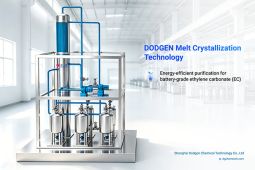
China's Ministry of Industry and Information Technology (MIIT) has officially recognized Shanghai DODGEN Chemical Technology's melt crystallization technology for purifying battery-grade ethylene carbonate (EC). This innovative retrofit has demonstrated a significant 72% reduction in energy consumption during the purification process. DODGEN's technology offers a more sustainable and cost-effective method for producing high-purity EC, a crucial component in lithium-ion battery electrolytes. The recognition by the MIIT signifies a major step forward in adopting advanced, energy-efficient chemical processing techniques within China's burgeoning battery industry. This development is expected to contribute to the overall environmental goals and supply chain resilience for electric vehicle and energy storage sectors. The company's successful implementation highlights the potential for technological advancements to drive substantial energy savings in chemical manufacturing. DODGEN's solution addresses the increasing demand for battery materials while mitigating the environmental impact associated with their production. The MIIT's endorsement could pave the way for wider adoption of similar green technologies across the industry.
The MIIT's endorsement of DODGEN's melt crystallization technology underscores a strategic imperative within China to enhance energy efficiency in critical manufacturing sectors, particularly those supporting the electric vehicle and battery industries. This recognition aligns with national objectives to reduce carbon emissions and secure supply chains for advanced materials. By validating a technology that achieves a 72% energy reduction, the MIIT signals a policy direction favoring process innovation that balances economic growth with environmental sustainability. This approach leverages technological advancements to address systemic challenges in energy-intensive industries, potentially creating a competitive advantage for domestic firms and influencing global standards for battery material production. The long-term implications involve a shift towards greener chemical processing, driven by both regulatory incentives and market demand for sustainable products.
AI-generated to prompt reflection — not editorial opinion, not advice, not a statement of fact. How this works.