China Develops Self-Sufficient Carbon-14 Nuclear Battery
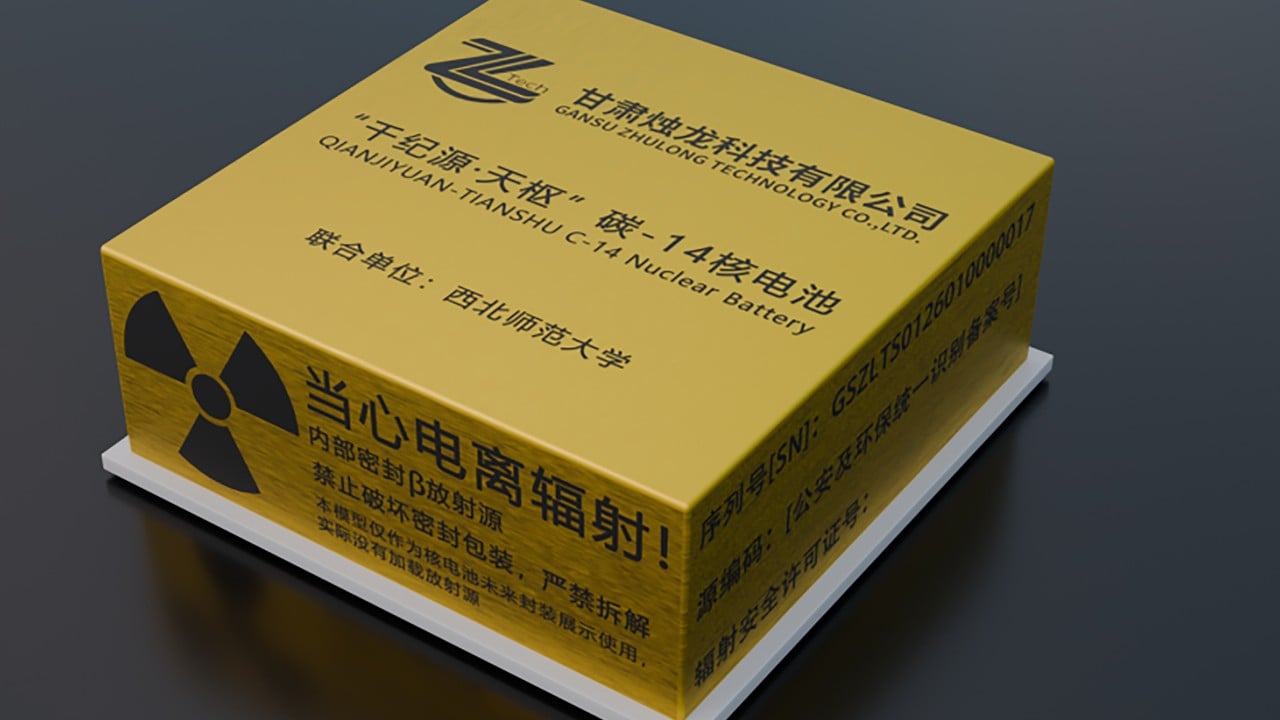
Chinese researchers have unveiled a new generation of nuclear battery, marking a significant advancement in long-life power sources. Northwest Normal University, in partnership with Gansu Zhulong Technology, announced the development on Monday. The "Qianjiyuan Tianshu" battery utilizes carbon-14 and a silicon carbide transducer. Crucially, the team emphasized that the entire development process, including all components, was achieved without reliance on foreign technology or parts. This self-reliant approach signifies a major step forward in China's domestic technological capabilities for nuclear power applications. The battery is described as a substantial upgrade from previous iterations developed by the research team. Further details on its performance and specific applications are anticipated.
The development of a domestically produced carbon-14 nuclear battery by Chinese institutions represents a strategic advancement in energy independence. By achieving this milestone without foreign technological input, China signals its intent to bolster its capabilities in specialized power sources. This move could have implications for long-term energy security and the development of niche technologies requiring stable, long-duration power. The focus on self-reliance aligns with broader global trends in technological sovereignty, potentially influencing international collaboration and competition in the nuclear energy sector over the next decade.
AI-generated to prompt reflection — not editorial opinion, not advice, not a statement of fact. How this works.