China Floods: Over 10,000 Students and Teachers Evacuated by Raft
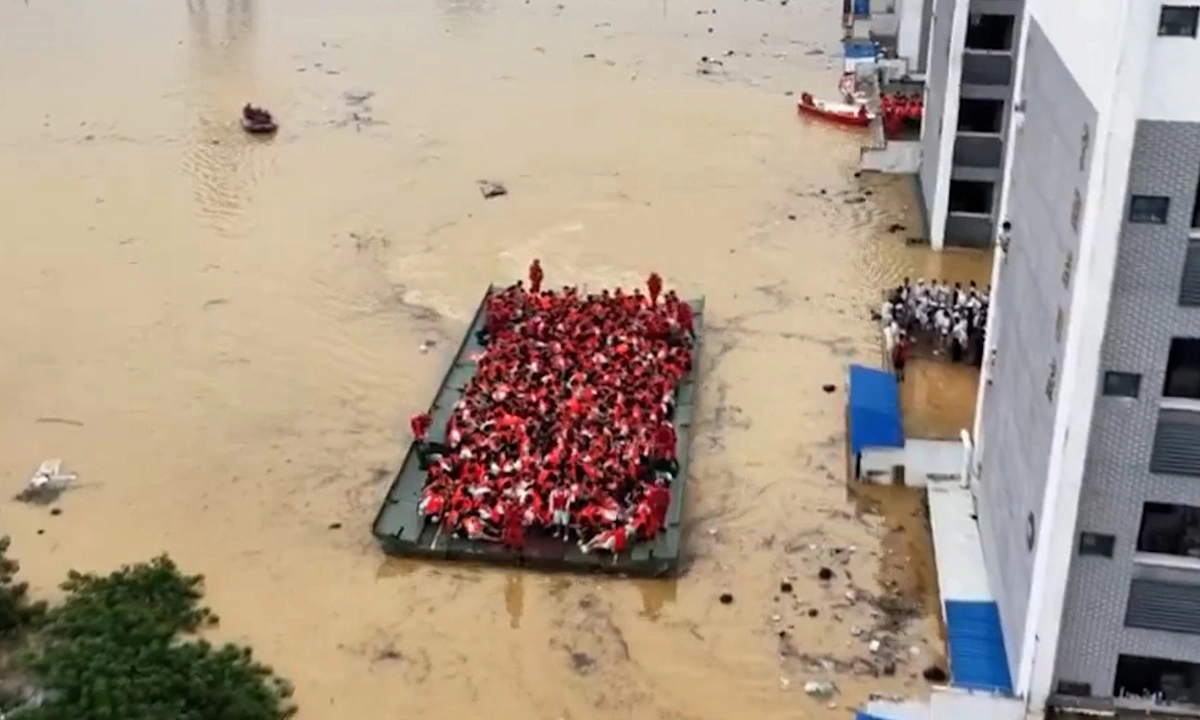
Chinese rescue forces deployed pontoon bridges, utilizing them as rescue boats, to evacuate thousands of students and teachers. These individuals were trapped within school grounds that had become submerged due to severe floodwaters. The operation involved a significant scale, with over 10,000 people needing to be moved to safety. The use of pontoon bridges as makeshift rafts highlights the critical nature of the situation and the innovative measures taken by rescuers to navigate the flooded areas. The affected schools were completely inundated, necessitating immediate and large-scale evacuation efforts. This event underscores the vulnerability of educational institutions and their occupants to extreme weather events and the challenges of emergency response in such conditions.
The extensive flooding in China, necessitating the evacuation of over 10,000 students and teachers via pontoon bridges, points to significant infrastructure vulnerabilities in flood-prone regions. This event highlights the critical need for enhanced disaster preparedness and resilient urban planning, particularly concerning educational facilities. Future investments should prioritize early warning systems, robust flood defenses, and adaptive building designs to mitigate the impact of increasingly severe weather events driven by climate change. The reliance on improvised rescue methods, while demonstrating immediate effectiveness, suggests a potential gap in pre-established emergency protocols for widespread inundation scenarios, prompting a review of resource allocation and response strategies for future crises.
AI-generated to prompt reflection — not editorial opinion, not advice, not a statement of fact. How this works.