China Lands First Reusable Rocket Successfully
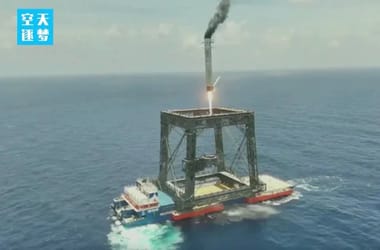
China has successfully landed its first reusable rocket, the Long March 10B, onto a water-based platform surrounded by a net. This achievement marks a significant milestone for China's space program, as it demonstrates the capability for vertical takeoff and vertical landing (VTVL) of a reusable rocket. Previously, only American company SpaceX had demonstrated this advanced landing technology. The successful recovery of the Long March 10B is crucial for reducing the cost of space launches and increasing the frequency of missions. This development positions China as a major player in the global commercial space race, alongside established entities like SpaceX. The ability to reuse rockets is a key factor in making space exploration and satellite deployment more economically viable.
China's successful landing of its first reusable rocket, the Long March 10B, signifies a critical advancement in its space capabilities. This achievement directly challenges the technological dominance previously held by companies like SpaceX in the reusable rocket sector. The economic incentive for reusable launch systems is substantial, promising reduced costs per launch and enabling more frequent access to space. This development could accelerate China's ambitions in satellite deployment, space tourism, and potentially deep-space exploration. The strategic implications are considerable, as it enhances national prestige and technological competitiveness in a rapidly evolving global space economy. Future developments will likely focus on increasing the reliability and reusability rate of these systems, further driving down costs and expanding market access.
AI-generated to prompt reflection — not editorial opinion, not advice, not a statement of fact. How this works.